
Not a Hospital, Not Weekly Therapy: What Is Mental Health IOP?
Mental health issues do not manifest themselves in one way. In many instances, they sneak in. Trouble sleeping. Constant tension. Exhausted emotionally, before the day ends. At first, it’s manageable. In the long run, it begins to influence work, relationships, and everyday life.
This is where weekly therapy does not seem like the answer anymore to many individuals in Craven County, NC. You can be doing the work, turning up, and discussing the issues, but you are nevertheless stuck. This is where a Mental Health Intensive Outpatient Program (IOP) will be able to come in.
Mental health IOP provided at Otter House Wellness is created to offer an evidence-based, formal care and enable you to maintain contact with your daily existence. You get good support that is meaningful, and you do not have to place everything on hold.
Understanding Mental Health IOP
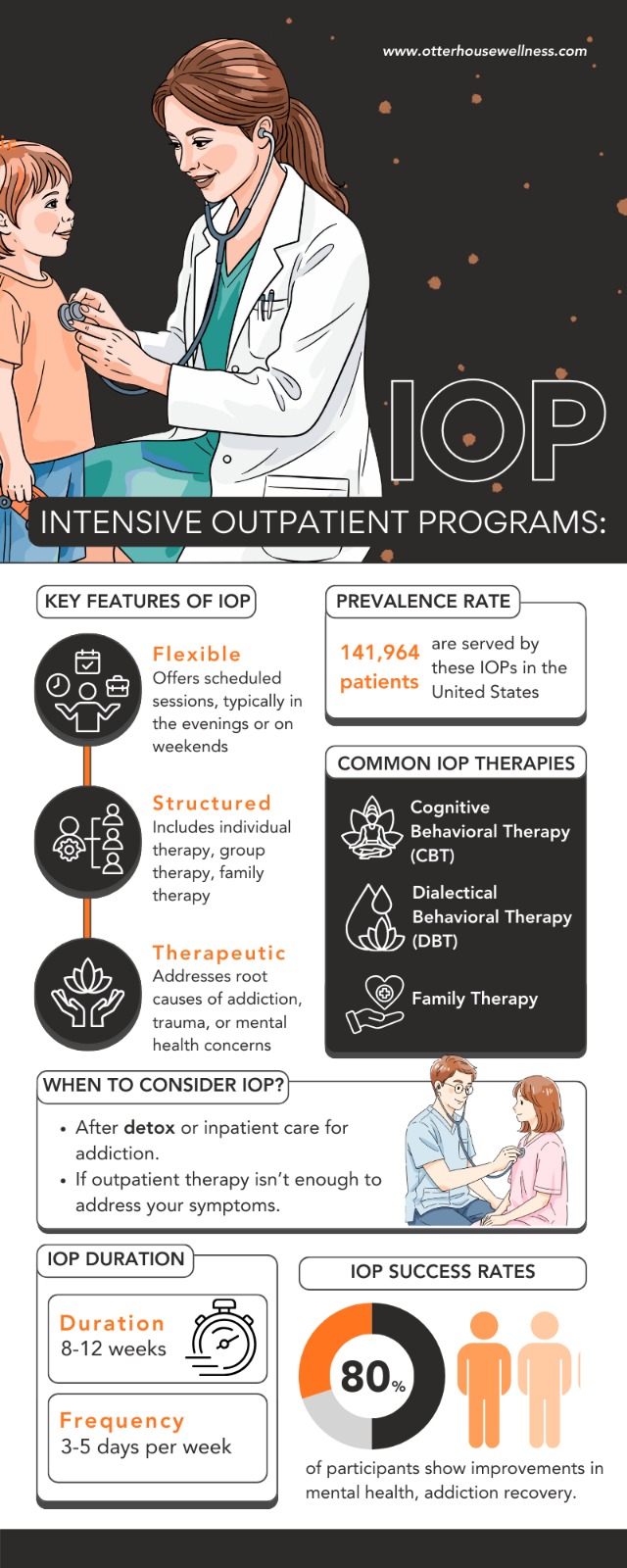
An Intensive Outpatient Program is placed between a normal outpatient therapy and an inpatient hospitalization. It also provides a superior level of care, but it does not entail any need to stay over or spend much time out of the home.
The majority of the IOPs include 9-15 hours of treatment per week, which are typically distributed over three to five days. This makes it possible to conduct a consistent therapeutic work, but at the same time, control independence.
According to the National Institute of Mental Health, outpatient treatment models that have been structured to maximize exposure to therapy and training have been found to correlate with better symptom management and less frequent hospitalization compared to care of lower intensity alone.
Who Mental Health IOP Is Designed For
Mental health IOPs are applicable to a wide audience. It is aimed at individuals whose symptoms are disrupting the normal functioning but are not in need of inpatient care.
Mental health IOP can be suitable for those who have:
- Tensions interfering work or relationships.
- Depression which has not been helped by weekly treatment.
- Symptoms associated with trauma including PTSD.
- Stress or chronic stress emotional control.
- Mental health and substance use disorders.
IOP is also typically a level of care given after an inpatient or residential treatment. It provides a step-down level of care to help the person to continue progress as they transition back to their daily activities.
What Treatment Looks Like in Practice
Mental health IOP cannot be seen as mere therapy hours expansion. The contrast is in the manner of care provision and reaffirmation.
Most programs combine:
- Group therapy.
- Personal therapy.
- Skill-building sessions.
Group therapy is at the center stage. It has been demonstrated that peer-supported treatment settings enhance engagement and decrease a sense of isolation. Often, when they know that other people are managing the same problems, many people open up.
Individual therapy gives time to have personal experiences, keep track of symptoms, and revise the goals as progress occurs. A combination of these factors produces a well-organized and adaptable course of treatment.
Evidence-Based Approaches Used in IOP
Quality mental health care is dependent on research-supported techniques. Mental health IOPs are generally evidence-based modalities that have demonstrated positive results in a broad spectrum of disorders.
Common approaches include:
- Cognitive Behavioral Therapy (CBT)
- Dialectical Behavior Therapy (DBT)
- Trauma-informed care
- Motivational procedures
National Institute of Mental Health reports that CBT and DBT form structured therapeutic interventions that are among the most effective strategies to use in the treatment of anxiety and mood disorders when administered on a consistent basis and at high intensity.
The Importance of Local Care in Craven County
Proximity of care is significant in the success of care. In local programs, obstacles to programs – transportation issues or time clashes – are minimized. This results in a reduced rate of dropping out of treatment.
Care delivery in Craven County enables people to use new skills in their daily settings. The practical implementation of this concept enhances learning and enhances the long-term results. Studies indicate that individuals able to incorporate treatment into their everyday lives tend to stay in programs and carry on with the progress even after discharge.
Otter House Wellness is one of the companies that are taking this strategy; the structured care is offered in such a way that does not interfere with the real-life.
What Sets Otter House Wellness Apart
Otter House Wellness prioritizes mental health care, which is not only based on structure but also on a personalized approach. The clinical assessment, personal goals, and continuous progress evaluation are all applied to develop treatment plans.
Their mental health IOP has several main characteristics:
- One-to-one planning of treatment.
- Regular therapeutic appointments.
- Integration of group and individual therapy.
- Evidence-based clinical practices.
- An encouraging non-judgmental atmosphere.
Instead of addressing the symptoms, the program is based on the development of skills, emotional stability, and long-term stability.
Measuring Progress in Mental Health IOP
Change in mental health care is not very quick, but it is not in vain. Numerous people involved in IOP state that they feel improvement in a short period of several weeks.
Some of the clinical outcomes are:
- Reduced intensity of symptoms
- Improved stress management
- Better emotional intelligence.
- More routine in their lives.
- Stronger coping strategies
Such results help to reduce the risk of relapse and enhance the quality of life of patients after treatment.
Taking the Next Step
The decision to use an Intensive Outpatient Program is a proactive measure and not an indication of failure. It is just about understanding that the level of support that you have at the moment will have to correspond to what is at hand.
Otter House Wellness is the source of the Mental Health IOP that is organized and evidence-based in Craven County, NC, and provides compassionate care to the people who seek it.
To get to know more of the available services, visit.
Otter House Wellness
January 23, 2026
- Rehab for Professionals in North Carolina (Executives, Business Owners)
 High performance often hides high stress. Learn how executive rehab programs in NC offer confidential recovery without stepping away from your responsibilities.
 - Private Rehab in Asheville, NC (Luxury Treatment Options)
 Why do so many people avoid rehab, even when they need it? The answer may lie in privacy, comfort, and outdated treatment models.
 - Mental Health Treatment Programs in Asheville, NC
 Is it stress, isolation, or something deeper? Explore what’s driving Asheville’s mental health crisis.
 - Medical Detox Near Asheville, NC
 Struggling to quit on willpower alone? Here’s why detox near Asheville may be the safer path forward.
 - Relapse Prevention Programs in Asheville, NC
 Learn how relapse prevention Asheville programs help you stay sober with 10 practical strategies and ongoing support in North Carolina.
 - Outpatient Rehab vs PHP vs IOP: Which Is Right for You?
 PHP vs IOP vs outpatient rehab explained. Learn which rehab program fits your needs and get guidance from Otter House Wellness in Asheville.
 - Dual Diagnosis Treatment in Asheville, NC (Complete Guide)
 Therapy helps. Rehab helps. But why do so many people relapse anyway? The answer may lie in what’s being missed.
Recommended Blogs


Rehab for Professionals in North Carolina (Executives, Business Owners)

Private Rehab in Asheville, NC (Luxury Treatment Options)