
Mental Health in Mecklenburg County: What Outpatient Treatment Really Looks Like
Mecklenburg County, a balanced mix of scenic areas and bustling urban energy, is seemingly all charm and opportunity. But more than 25% of its residents struggle with crippling depression. From job insecurity to traffic congestion, and from social isolation to neighborhood crime, all contribute to high levels of stress.
While free counseling access is available at community resource centers, the availability of providers is still quite limited… and it’s not just that; people struggle with affordable outpatient services, and mood disorders are common. Even children are affected.
In this situation, the need for accessible mental health outpatient treatment options in Mecklenburg County, NC, is stronger than ever. With a comprehensive system, people can seek help and access care without stigma or fear of judgment. Today, let’s talk about it:
Major Factors Contributing to The Mental Health Struggles in Mecklenburg County, NC
In Mecklenburg, more than 27% of residents needing mental health services do not even receive the appropriate professional treatment.
When people cannot access timely counselling, medication support, and evidence-based therapy, it only contributes to worsening the severity of symptoms. Problem is, this isn’t the only factor contributing to high rates of depression.
Economic Strain:
Residents have to face high poverty rates along with rising costs of housing, energy, and utilities that contribute to the burden of stress.
As a result, adults and more than 20% of residents report a clinical diagnosis of depression rooted in financial pressure.
Food Insecurity:
More than 15% of households in Mecklenburg County struggle with food insecurity. This is due to the economic conditions that families are facing.
This lack of nutrition is also linked to higher rates of depression and anxiety because a poor diet causes brain chemistry to shift, which is also stress-inducing on its own.
Social Isolation:
The rapid urbanization within the county, like the Charlotte area, has resulted in many residents needing to live farther apart, which has consequences for increased feelings of isolation.
Around 43% of senior citizens are currently living alone, and the families residing together are less connected due to the demands of modern life.
High Rates of Depression Among Youth:
Roughly 1 in 3 high school students experience persistent sadness and significant sadness on a regular basis.
This not only mirrors national trends but also shows that teenagers are struggling with the pressures of school and social life.
Caregiver Stress:
In Mecklenburg County, more than 60,000 individuals are responsible for caregiving responsibilities. This leads the caregivers to battle anxiety and depression while also managing the needs of their loved ones.
As a result, we have seen a 20 – 25% increase in levels of stress and depression among caregivers.
Limited Access to Care:
While many county and nonprofit initiatives, like community resource centers and behavioral health programs, are out there, there is still a shortage of mental health services for low-income residents, especially in suburban and rural areas.
This gap in the availability of services has resulted in delays and worsening outcomes for people who need treatment for mental health conditions.
Why Mental Health Outpatient Treatment Options in Mecklenburg County, NC, Are the Solution
With over 100,000 residents in the county requiring mental health outpatient treatment options in Mecklenburg County, NC, fortunately, community-focused facilities like Otter House Wellness understand the gravity of the situation and offer personalized care with a range of evidence-based services.
Here’s what you can expect:
Improved Access to Care:
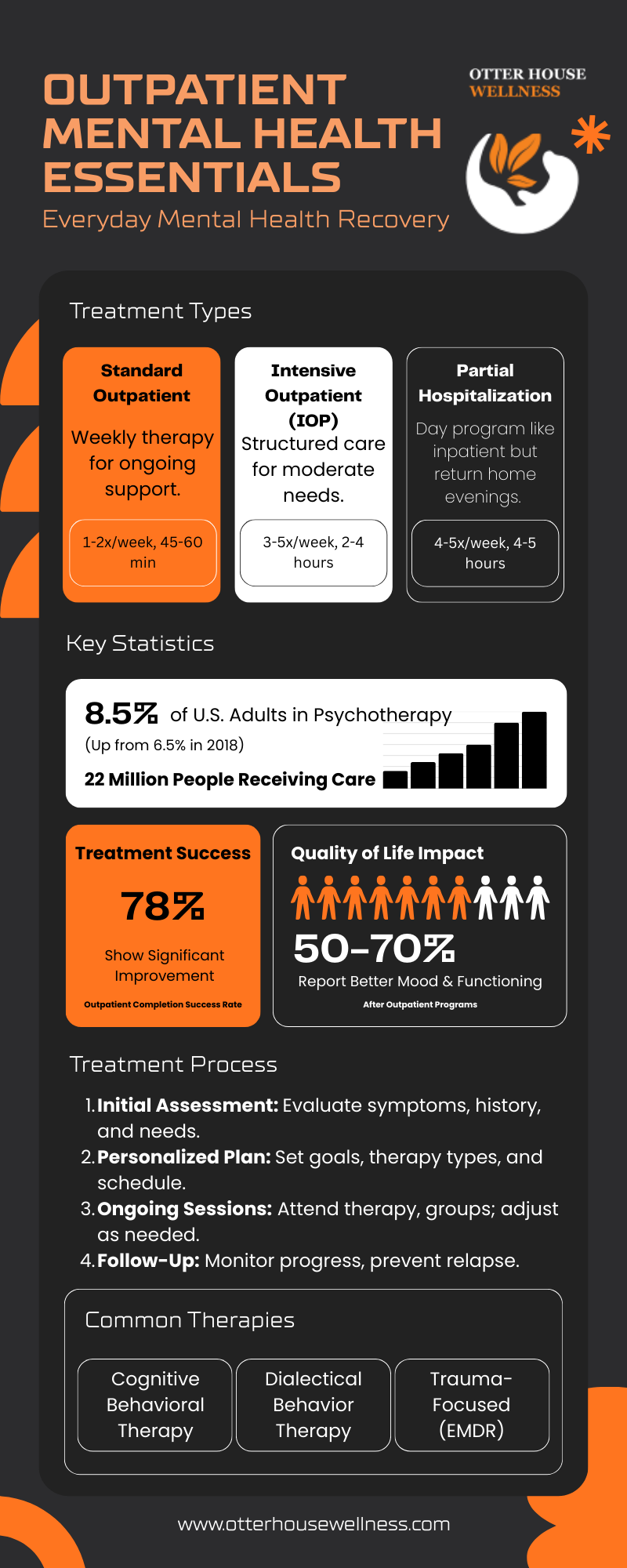
Outpatient programs allow residents to receive consistent, professional support without the need for full-time hospitalization.
This means that they can continue working, studying, or managing daily responsibilities while also attending structured appointments and therapy sessions alongside.
Flexible and Affordable Options:
Top tier mental health facilities, like Otter House Wellness, offer insurance coverage in partnership with a number of well-known providers and networks.
This flexibility helps make quality mental health care accessible to low-income and underserved residents who are already facing economic strain or food insecurity.
Support for Social Connectivity:
A majority of mental health outpatient treatment options in Mecklenburg County, NC, also include group therapy, structured social activities, peer support, skills-building workshops, and family counseling to help individuals combat social isolation and build meaningful connections without feeling stigmatized.
Early Intervention for Youth and Adults:
Some specialized outpatient programs are tailored to youth, caregivers, and adults with the goal of preventive and early intervention services. These services address depression, stress, and chronic anxiety before the mental health conditions become severe.
The early intervention allows residents to function normally without disruption to daily life.
Medication Management for Depression:
At times, mental health recovery can become a sensitive process if the individual has turned towards drug usage. Majority mental health outpatient treatment options in Mecklenburg County, NC, understand the sensitivity and complexity of such a situation.
Therefore, experienced psychiatrists and psychiatric nurse practitioners offer medication management via thorough evaluations, appropriate prescriptions, and monitor progress to ensure treatment remains effective and safe.
Taking Charge of Your Mental Health Journey
Mental health recovery is an uphill battle. Along with determination and consistency, you require a program that aligns with your needs and lifestyle. You deserve a center that understands why a safe, supportive, structured, and personalized approach is non-negotiable for a lasting recovery.
At Otter House Wellness, we understand the need for comprehensive care, which is why we offer a structured, evidence-based program with therapy, counseling, and holistic support to help you regain balance and well-being. Our goal is to work closely with the rhythm of your life so you can gain stability in the present and build resilience for your future.
Unsure where to start and seek help? Call Otter House Wellness at (828) 373 2156 and take the first brave step of your mental health journey.
Otter House Wellness
February 17, 2026
- Telehealth Therapy That Accepts Medicaid in North Carolina
 Tired of spending gas money and half a day driving to a therapist? Discover how NC Medicaid lets you see top providers from home with zero copay.
 - Group Therapy Covered by Medicaid in North Carolina
 Replaying the exact same thoughts at 2 AM with no way out? Discover how NC Medicaid fully covers the group therapy hack that breaks your mental loops.
 - Outpatient Mental Health Treatment for Medicaid Recipients in NC
 Did you know you don't need a doctor's referral to start therapy on NC Medicaid? Discover how to access fast, free mental health care from home.
 - Medicaid Mental Health Treatment for Parents and Families in NC
 You can't pour from an empty cup. Discover the "oxygen mask" rule in NC Medicaid that covers parent AND child mental health under one plan.
 - Mental Health Programs for Young Adults on Medicaid in North CarolinaDoes Rhode Island Medicaid cover treatment for addiction and depression? Find out what’s covered, from detox and residential care to PHP, IOP, therapy, and medication.
- ADHD Treatment That Accepts Medicaid in North Carolina
 Looking for ADHD treatment that accepts Medicaid in North Carolina? Learn about treatment options and how support can make daily life easier.
 - Bipolar Disorder Treatment Covered by Medicaid in NC
 Learn about bipolar disorder treatment covered by Medicaid in NC, including therapy, medication, Medicaid plans, and support options at Otter House Wellness.
Recommended Blogs


Telehealth Therapy That Accepts Medicaid in North Carolina

Group Therapy Covered by Medicaid in North Carolina