
Not Sure Where to Start? Mental Health Options in Wake County Explained
For many years, mental health challenges have affected individuals and families throughout North Carolina. The statewide prevalence has reached up to 1 in 5 residents now. Yet many people still don’t seek treatment; mainly because they don’t know where to begin.
For residents looking for mental health outpatient treatment options in Wake County, NC, awareness of the resources available and understanding the available outpatient services can create a foundation that leads to a clearer path of healing.
In such a situation, intensive outpatient programs play a vital role as they allow individuals to continue living at home, working, and caring for their families. Today, let’s talk about how a structured program can offer you stability while also supporting sustainable recovery.
The Growing Need for Accessible Outpatient Care
Did you know that according to the North Carolina Department of Health and Human Services, more than 20% of individuals report experiencing a diagnosable mental illness each year. Yet, just 47% of these individuals receive any form of treatment. This is mainly because of the gaps in accessibility, but also because many do not know where to access affordable counseling.
What Outpatient Mental Health Treatment Includes
Effective mental health outpatient treatment options in Wake County, NC, cover a spectrum of therapeutic services designed to support individuals with varying levels of symptoms. While treatments vary from clinic to clinic, and are highly dependent on the provider, some core components often include:
Individual Therapy:
Individual therapy is considered as the most effective form of treatment till date. In most programs, this often includes CBT, DBT, trauma-informed modalities, and EMDR.
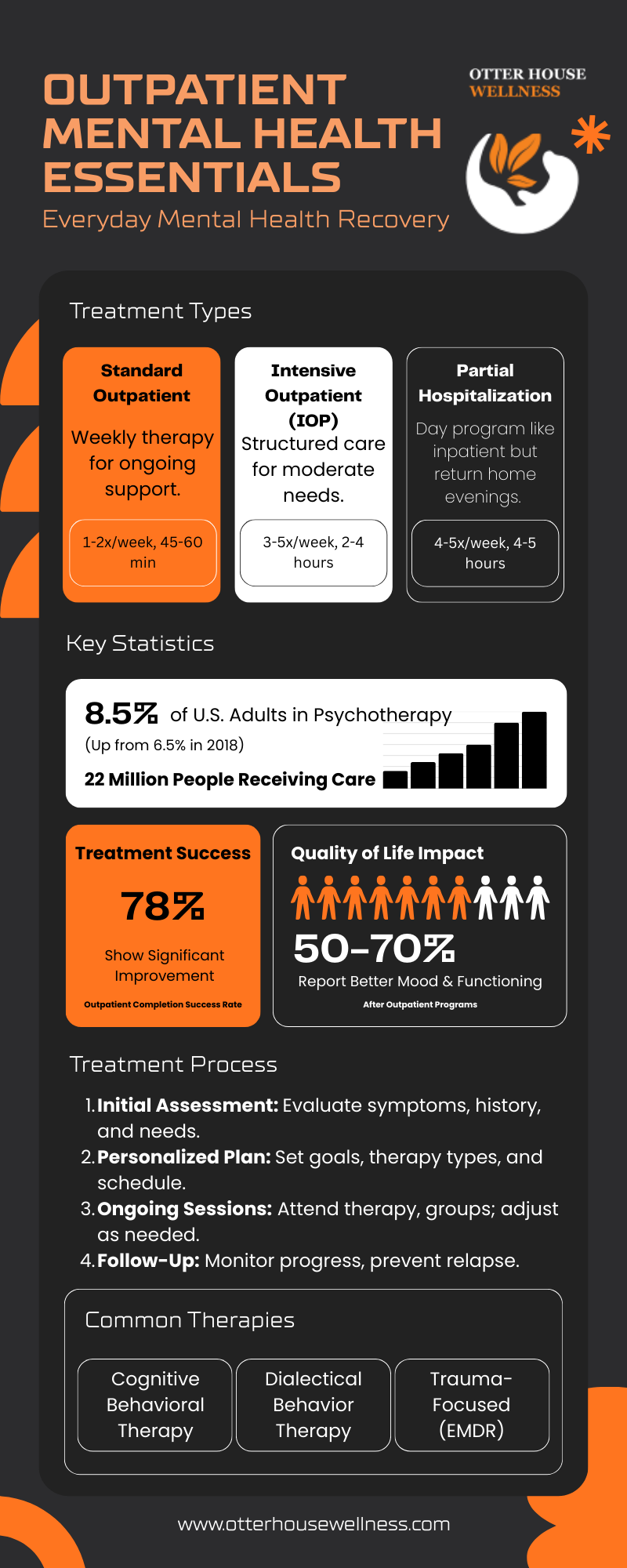
Multiple researches confirm that these modalities, along with consistent weeks of engagement, can reduce depression and anxiety symptoms by 40 – 60% within 12 weeks for many individuals.
Group Therapy:
Another essential element of outpatient treatment is group therapy. It is highly recommended because group settings provide a sense of community reinforcement and shared understanding, which reduces isolation.
It is also why many programs offer specialized groups for anxiety, trauma, substance use, and emotional regulation to strengthen the process of recovery.
Medication Management:
Every 1 in 6 adults in the United States takes a prescribed medication for their mental health conditions. However, without proper oversight, it can become a problem.
Quality facilities, such as Otter Wellness, understand the sensitivity and complexity of this process. Therefore, our psychiatrists and psychiatric nurse practitioners provide thorough evaluations, appropriate prescriptions, and monitor progress to ensure treatment remains effective and safe.
Case Management and Support Services:
At times, some individuals also require assistance with daily functioning. This is why some outpatient programs also offer help in navigating insurance, employment support, and coordination with primary care providers.
This continuity with wraparound support helps individuals stabilize and manage their long-term wellness with confidence.
Types of Outpatient Programs Available
Intensive Outpatient Programs (IOP):
IOP is a more structured version of outpatient therapy. It is more structured than standard therapy and requires individuals to attend therapy sessions multiple days per week.
This level of care is ideal for those who require consistent support but are not in need of full-time inpatient treatment.
Partial Hospitalization Programs (PHP):
PHP is a higher-level program that offers daily treatment for several hours while also allowing them to return home in the evenings. This option acts as a step up from IOP as well as a step down from inpatient care.
It is ideal for people who have acute symptoms and need stabilization, but without hospitalization.
Dual Diagnosis Treatment:
More than 50% of individuals in treatment suffer from a substance use disorder while battling mental health conditions alongside.
To help individuals with co-occurring conditions, many Wake County outpatient providers, like Otter House Wellness, offer integrated care of mental health with addiction services that address both simultaneously.
Common Barriers to Treatment
Even though quality services exist across the entire county with reputable providers, access is still a challenge for many individuals who require timely support in moments of distress. Some key barriers include:
- Long Wait Times: Unfortunately, despite the presence of clinics for counseling and psychiatry, people have to often wait 4 to 12 weeks to get their initial psychiatric appointments.
- High Out-of-pocket Costs: For uninsured individuals, this is a big problem because mental health treatment is expensive.
- Provider Shortages: In rural areas surrounding Wake County, there is a significant shortage of licensed clinicians, which results in delays for the community.
- Stigma: Stigma prevents 30% of adults from even trying to seek help simply because they fear the judgment and criticism they will face if others find out.
The thing is, while these challenges are real and overwhelming, recognizing these barriers can help individuals advocate for themselves and select the right providers who offer transparency and flexible scheduling with guidance of insurance assistance.
How to Choose the Right Outpatient Program
Finding the right level of care in your area, along with matched support, is important because the quality of your choice is what influences your long-term progress. In order to decide, you have to consider:
- Whether your current symptoms interfere with daily functioning or relationships in the home.
- Whether your condition is mild and you need weekly therapy, or is the situation more complex and requires structured multi-day support.
- If your diagnosis and the severity require medication management to alleviate the intensity of symptoms.
- If the facility of your choice has insurance acceptance and offers clarity for payment options.
- Whether the chosen provider offers dual diagnosis care in case of a SUD alongside mental health needs.
In some cases, it also helps to schedule an initial consultation in order to understand the scope of care before committing to a higher program.
A Supportive Option for Residents Seeking Compassionate Care
Remember, healing is not a linear path, and when you are evaluating mental health outpatient treatment options in Wake County, NC, you deserve to choose a program that is safe, reliable, and has the capacity to make a significant difference in long term recovery.
Otter House Wellness understands the need for accessible and compassionate care, which is why we offer structured programming and evidence-based support in a calm therapeutic environment. This helps you gain stability in the present, build resilience, and gain clarity that can guide your future.
Wondering where to begin? Call Otter House Wellness at (828) 373 2156 and begin a step toward the most balanced version of your life.
Otter House Wellness
February 16, 2026
- Rehab for Professionals in North Carolina (Executives, Business Owners)
 High performance often hides high stress. Learn how executive rehab programs in NC offer confidential recovery without stepping away from your responsibilities.
 - Private Rehab in Asheville, NC (Luxury Treatment Options)
 Why do so many people avoid rehab, even when they need it? The answer may lie in privacy, comfort, and outdated treatment models.
 - Mental Health Treatment Programs in Asheville, NC
 Is it stress, isolation, or something deeper? Explore what’s driving Asheville’s mental health crisis.
 - Medical Detox Near Asheville, NC
 Struggling to quit on willpower alone? Here’s why detox near Asheville may be the safer path forward.
 - Relapse Prevention Programs in Asheville, NC
 Learn how relapse prevention Asheville programs help you stay sober with 10 practical strategies and ongoing support in North Carolina.
 - Outpatient Rehab vs PHP vs IOP: Which Is Right for You?
 PHP vs IOP vs outpatient rehab explained. Learn which rehab program fits your needs and get guidance from Otter House Wellness in Asheville.
 - Dual Diagnosis Treatment in Asheville, NC (Complete Guide)
 Therapy helps. Rehab helps. But why do so many people relapse anyway? The answer may lie in what’s being missed.
Recommended Blogs


Rehab for Professionals in North Carolina (Executives, Business Owners)

Private Rehab in Asheville, NC (Luxury Treatment Options)