
The Industrious Soul: Strengthening Veteran Resilience in the Catawba Valley
Is a 15-minute VA check-in enough for complex trauma? Discover why some veterans are choosing a smaller, more personalized alternative.
Catawba County was built by makers. From the furniture craftsmen of Hickory to the textile pioneers of Newton, this region defines what it means to work with your hands. This “Industrious Soul” is mirrored in our veterans. You understand structure, discipline, and the value of a job well done.
But the same grit that made you an elite service member can become a barrier when navigating internal trauma. (The fact is, you’d rather push through the pain.) In the Catawba Valley, there is a deep cultural pride in “fixing it yourself.” Yet nearly 50% of veterans who need mental health care do not seek it, often due to the belief that they should handle the burden alone.
Otter House Wellness in Asheville is the “Master Workshop” for mental health. We aren’t here to change who you are or dismantle your drive. We provide the clinical tools to help you repair the damage that service left behind so you can operate at full capacity again. Read on to see how we help you refine your resilience.
A Boutique Alternative to the “Big System” Waitlists
Veterans are often used to waiting. Waiting for orders. Waiting for deployment. Waiting for the VA. But when it comes to your mental health, waiting is unaffordable.
Institutional Fatigue
Many Catawba veterans rely on the Hickory VA Outpatient Clinic for their care. While the staff there is dedicated, the high demand often leads to a feeling of “processing” rather than “personalization.” You might feel like just another case file in a massive government database.
When you are dealing with complex trauma or substance use, you need more than a 15-minute check-in. You need a team that has the bandwidth to actually hear you.
The Intimate Edge
We offer a distinct alternative. We highlight our 16-person maximum capacity because it changes the entire dynamic of treatment. At Otter House, you are part of a small, trusted cohort. Every clinician knows your name, your service history, and your specific goals.
You don’t have to re-explain your story to five different providers. This intimacy builds trust quickly, allowing you to get to the real work faster than you could in a large institution.
The “Foothills-to-Blue Ridge” Shift
Geography plays a role in healing. We frame the drive up I-40 as a necessary transition.
Leaving the day-to-day responsibilities of the Piedmont for the quiet focus of the Asheville mountains allows the “noise” of life to settle. This physical shift from the foothills to the Blue Ridge creates a psychological boundary.
It signals to your brain that you are entering a new phase of the mission. It makes room for real clinical progress that is hard to achieve when you are still sleeping in the same environment where your stress lives.
Tactical Tools for Post-Service Mastery
You wouldn’t try to fix a precision engine with a sledgehammer. You need the right tools for the job. Our clinical modalities are designed to address the specific mechanics of veteran trauma.
EMDR for the “Stuck” Gear
Think of trauma like a jammed gear in a complex machine. No matter how much you push, it won’t turn. This stuck cog shows up as intrusive memories, nightmares, or hyper-vigilance that won’t shut off.
We use EMDR as the specialized process to unjam that gear. It helps the brain process the “stuck” memory so it’s filed away into the past where it belongs. This resolves the glitch without you having to relive the event over and over in talk therapy.
Mindfulness for Tactical Focus
We reframe mindfulness for the veteran community. This isn’t about relaxation or clearing your mind. It is about situational awareness for your internal state.
In the field, you were trained to scan your sector for threats. We teach you to scan your internal sector. You learn to identify a stress response—a tightening chest, a clenched jaw—before it becomes an outburst or a drink. This gives you the tactical advantage over your own nervous system.
DBT for Relational Strength
Transitioning back to civilian life in Catawba County often means navigating diverse roles in manufacturing, tech, or family life. Communication can be a minefield. Dialectical Behavior Therapy (DBT) provides the blueprint for relational strength.
It teaches you how to de-escalate conflict, express your needs clearly, and manage intense emotions without burning bridges. It is essential training for the veteran transitioning into a leadership role or reconnecting with a spouse.
Direct Support & Veteran Benefits Navigation
You served your country. You earned the right to choose the best care for your recovery. We help you navigate the system to ensure you get it.
Community Care & Choice
Many veterans feel locked into the VA system. But under the VA MISSION Act and Community Care Network (CCN), you have choices.
If VA options are limited or wait times are too long, you can choose private, high-tier care like Otter House.
We are a community provider that partners with the VA to ensure you get the timely, specialized attention you deserve.
In-Network Security
We believe that “private care” shouldn’t mean a private bill. We work seamlessly with TRICARE and CHAMPVA to support military families.
Beyond that, we are also in-network with Blue Cross Blue Shield NC, which covers many veterans working in the private sector.
We handle the authorization process to ensure your benefits work as hard as you do.
Catawba Veteran Advocacy
We are committed to the local community. We work alongside organizations like Catawba County Veteran Services to ensure a smooth “warm handoff.”
We don’t just treat you and send you on your way. We coordinate with your local support system to ensure you have a solid landing plan when you return to Hickory or Newton.
Refine Your Resilience: The Next Phase of Your Service
You have already proven your strength. Now it is time to refine it. Dealing with trauma or substance use isn’t about weakness. It is about maintenance. You maintain your weapon and your gear; you need to maintain your mind.
If you are ready to enter the workshop and start the repairs, we are ready to get to work. Call Otter House Wellness directly at (828) 373-2156 or visit us online at otterhousewellness.com to speak with our team. The mission continues, and we are here to support it.
Otter House Wellness
February 18, 2026
- Veterans and Military Mental Health Treatment Gaston County, NC
 More than 75% of post-9/11 veterans report pressure to appear “fine.” What happens when that pressure quietly turns into anxiety, withdrawal, or burnout in Gaston County?
 - Veterans and Military Mental Health Treatment Catawba County, NC
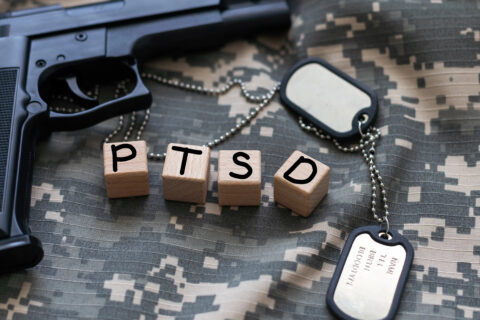 Is a 15-minute VA check-in enough for complex trauma? Discover why some veterans are choosing a smaller, more personalized alternative.
 - Mental Health Outpatient Treatment Options Buncombe County, NC
 With nearly 50 suicides annually and rising youth risk, what is driving the mental health emergency in Buncombe County?
 - Mental Health Outpatient Treatment Options Forsyth County
 Residents average 4.4 poor mental health days each month. What’s driving the surge in emotional strain across Forsyth County?
 - Veterans and Military Mental Health Treatment Mecklenburg County, NC
 You’ve mastered high-performance environments. But what happens when your nervous system won’t power down? Explore performance-based recovery designed for modern veterans.
 - Veterans and Military Mental Health Treatment Wake County NC
 Why are Wake County veterans driving three hours west for mental health care? Discover what a 16-person trauma program in the mountains offers that larger systems can’t.
 - Mental Health Outpatient Treatment Options Guilford County, NC
 Over 15% of adults in Guilford County have unmet mental health needs. What outpatient treatment options are available?
 - Mental Health Outpatient Treatment Options Mecklenburg County, NC
 Over 100,000 residents need mental health support. Here’s how outpatient care in Mecklenburg County makes treatment more accessible.
 - Mental Health Outpatient Treatment Options Wake County NC
 One in five North Carolina residents faces a diagnosable mental health condition each year. Discover why many still do not seek help… and how outpatient care in Wake County can close that gap.
 - North Carolina IOP in Cabarrus County
 North Carolina IOP in Cabarrus County depends on solid diagnosis tools to give you the right intensity of care. Let’s explore some important tools used for this purpose.
Recommended Blogs


Veterans and Military Mental Health Treatment Gaston County, NC
The Anchor’s Strength: Reinforcing Mental Wellness for Gaston County Veterans Gaston County is a place…

Veterans and Military Mental Health Treatment Catawba County, NC
The Industrious Soul: Strengthening Veteran Resilience in the Catawba Valley Is a 15-minute VA check-in…

Mental Health Outpatient Treatment Options Buncombe County, NC
Beyond the ER: Smarter Mental Health Support for Buncombe County Residents Buncombe County, NC has…