
Diagnosis Tools Used During North Carolina IOP in Cabarrus County
You might have heard someone who is conscious about cleanliness saying they have ‘OCD.’ Similarly, someone in a bad mood is quick to think they’re ‘depressed’.
Some think it’s cute to self-diagnose and throw around terms without knowing the weight they carry. But only mental health experts and those actually fighting these demons understand how cruel these conditions can be.
That’s why behavioral health centers have a standard criterion to check whether you have a mental health condition or if what you’re feeling is temporary. It’s also worth mentioning that when you start North Carolina IOP in Cabarrus County, the center will conduct a series of steps to diagnose your condition for treatment efficacy.
And while the exact test or diagnosis protocol can vary depending on the center and your situation, some are standard. This blog explains the diagnosis tool most behavioral health centers use to name your situation and ensure you receive the right level of care.
Keep reading to know the tests you might encounter during North Carolina IOP in Cabarrus County.
PHQ-9
The PHQ-9 is a 9-question tool used to measure your physical and mental state over the past two weeks. It asks questions about your sleep, energy, appetite, and if you have lost interest in things that meant something to you earlier.
While each behavior center can use different wording, here are the main points you answer in a PHQ-9 test:
- Do you have little interest or pleasure in doing things?
- Are you feeling down or hopeless?
- Do you have trouble falling or staying asleep? Or are you sleeping too much?
- Are you tired or don’t have enough energy?
- Has your appetite changed? Do you not eat much or overeat?
- Do you feel like a failure, or like you have let people down?
- Is it hard for you to focus on things like reading or watching TV?
- Are you moving or speaking so slowly that others notice?
- Have you had thoughts that you would be better off dead or of hurting yourself?
All these questions you answer during the North Carolina IOP in Cabarrus County are given a number from 0 to 3, 0 meaning you don’t have that symptom and 3 indicating you struggle with the point in question. Once you complete the questionnaire, your points are added up for a final score so the clinical team can know how severe your depression is.
Here’s a simple breakdown of this scoring:
- 0-5 = not depressed, only temporarily sad
- 5-9 = mild depression
- 20 or higher = severe depression
Visualizing your condition via a score helps the experts track how well you’re doing. During North Carolina IOP in Cabarrus County, if your score goes down, it means the treatment is working. And if it stays high, the expert might change their approach.
BDI-II
The BDI-II is a 21-question list used to see how intense your depression is. Once it’s clear that you suffer from a depressive disorder, this test depicts its severity by asking important questions about your mental and physical state.
Experts trust this for the North Carolina IOP in Cabarrus County because it covers both the emotional and physical sides of depression.
This form has multiple-choice questions, and for each one, you choose the statement that best describes your life over the last two weeks. Here are the crucial areas that these 21 questions cover:
- Your Emotions. You are asked about tiredness, guilt, and if you feel like a failure or feel hopeless.
- Your Body. This list includes points about physical changes, like loss of energy and sleeping too much or too little.
- Your Mind. You respond about having a hard time making decisions, or if you have lost interest in people and activities you used to love.
When you read this detailed list, you’ll see that even though the answers are multiple choice, they are in a sequence. Ticking the first option for a question means you don’t have the asked point, and checking 3 means you strongly face it. Then, just like PHQ-9, your total points are added to determine depression severity.
BDI-II is a vital tool for North Carolina IOP in Cabarrus County because it shows where you are hurting the most, so the clinical team can build a treatment plan that fits you the most.
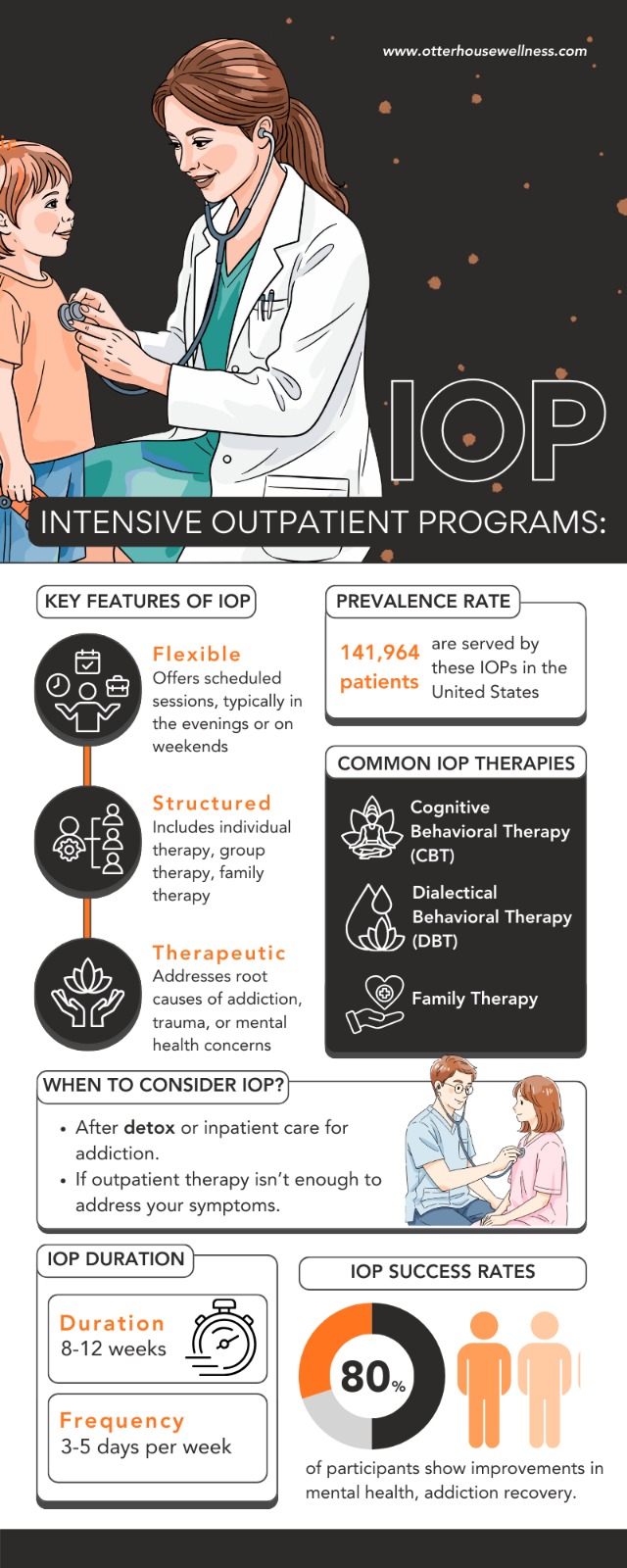
GAD-7
GAD = Generalized Anxiety Disorder. So the GAD-7 question tool is meant to measure anxiety. It helps experts check how much worry and tension are affecting your daily life. This test asks how frequently you have been bothered by specific problems to understand problem severity.
Here are the 7 main things this test is meant to check:
- Do you feel nervous, anxious, or on edge?
- Feeling unable to stop or control worrying.
- Worrying too much about different things.
- Trouble relaxing.
- Being so restless that it is hard to sit still.
- Becoming easily annoyed or irritable.
- Feeling afraid as if something awful might happen.
You’re provided with options like “not at all” and “nearly every day” to GAD-7 questions, and your selected answers are then scored from 0 to 3.
Similar to PHQ-9, a score of 5-9 on a GAD-7 means you have mild anxiety. But if you score 15 or higher on the test, the team leading North Carolina IOP in Cabarrus County will know that your problem is serious.
Needless to say, the experts will adjust your treatment according to the results so you can manage your stress and worry better.
ASAM Criteria
The ASAM Criteria is a system used to diagnose the severity of substance use disorders and any co-occurring mental health issues. Put simply, it’s meant to tell the experts of the North Carolina IOP in Cabarrus County if your condition is stable enough for this model or if you need something stricter.
Here are the six areas of your life this system evaluates to ensure treatment effectiveness:
- Withdrawal Risk: The ASAM criteria look at your history with drugs or alcohol to see if stopping will cause life-threatening physical reactions.
- Medical Health: The experts will check if you have any physical illnesses that could make your recovery harder.
- Mental Health: The test determines if the patient has depression, PTSD, or bipolar disorder, along with an addiction.
- Willpower: It measures how ready you are to actually start changing your habits.
- Relapse History: It looks at your past attempts to stay sober and why they did or did not work.
- Support System: It checks if your home is a safe place to heal or if it is a trigger zone that will cause a setback.
Answers to these 6 areas clear the picture for experts, so they can plan your treatment accordingly. For example, if you score high in withdrawal risk or mental health, experts might decide that North Carolina IOP in Cabarrus County isn’t suitable and you need an inpatient rehab. But if your scores are moderate, you’ll stay in an intensive outpatient program and slowly step down to weekly therapy.
Everything is Calculated
Otter House Wellness and other reliable behavioral health centers run on credible systems. We make sure your diagnosis and treatment are accurate, so you can return to a healthy life ASAP. If your days are feeling heavy or there is a pit in your stomach even for small things, call us today, and let’s rule out every possibility together.
Otter House Wellness
January 30, 2026
- Telehealth Therapy That Accepts Medicaid in North Carolina
 Tired of spending gas money and half a day driving to a therapist? Discover how NC Medicaid lets you see top providers from home with zero copay.
 - Group Therapy Covered by Medicaid in North Carolina
 Replaying the exact same thoughts at 2 AM with no way out? Discover how NC Medicaid fully covers the group therapy hack that breaks your mental loops.
 - Outpatient Mental Health Treatment for Medicaid Recipients in NC
 Did you know you don't need a doctor's referral to start therapy on NC Medicaid? Discover how to access fast, free mental health care from home.
 - Medicaid Mental Health Treatment for Parents and Families in NC
 You can't pour from an empty cup. Discover the "oxygen mask" rule in NC Medicaid that covers parent AND child mental health under one plan.
 - Mental Health Programs for Young Adults on Medicaid in North CarolinaDoes Rhode Island Medicaid cover treatment for addiction and depression? Find out what’s covered, from detox and residential care to PHP, IOP, therapy, and medication.
- ADHD Treatment That Accepts Medicaid in North Carolina
 Looking for ADHD treatment that accepts Medicaid in North Carolina? Learn about treatment options and how support can make daily life easier.
 - Bipolar Disorder Treatment Covered by Medicaid in NC
 Learn about bipolar disorder treatment covered by Medicaid in NC, including therapy, medication, Medicaid plans, and support options at Otter House Wellness.
Recommended Blogs


Telehealth Therapy That Accepts Medicaid in North Carolina

Group Therapy Covered by Medicaid in North Carolina