
Not Sick Enough for a Hospital, But Not Okay Either: Behavioral Health IOP in Onslow County
You might be reading this because life feels heavy and relentless, and you know something needs to change. Maybe you’re overwhelmed by daily stress, or you’re watching someone you care about struggle with intense emotional ups and downs. When traditional therapy isn’t enough but hospitalization feels too much, Intensive Outpatient Programs (IOPs) can be a real lifeline.
In Onslow County, North Carolina, behavioral health challenges are significant and growing. People here often wait weeks just to see a therapist, and many live with depression, anxiety, or substance-use concerns without enough support.
Below, you’ll find clear explanations about what Behavioral Health IOP is, why it matters, how it works, and what positive impact it can have on your life or the life of someone you care about.
Why Behavioral Health IOP Matters in Onslow County
In Onslow County, the shortage of mental health providers is not just inconvenient; it’s a real barrier to recovery. Residents here have access to only about 150.6 mental health providers per 100,000 people, which is lower than both the North Carolina average (155.7) and the national average (178.7).
Meanwhile, substance abuse provider availability is even more limited. That means people who are trying to get help often face waitlists, long travel distances, or care that isn’t frequent enough to make real progress.
Across North Carolina, about 24.9% of adults reported symptoms of anxiety or depression in 2023, compared with 32.3% nationwide. Even so, many still go without care because of cost, access, or long waitlists.
Youth in the state also experience high levels of depression, with 15.3% of young people aged 12–17 reporting a major depressive episode, higher than the national average of 14 %.
What Is a Behavioral Health Intensive Outpatient Program (IOP)
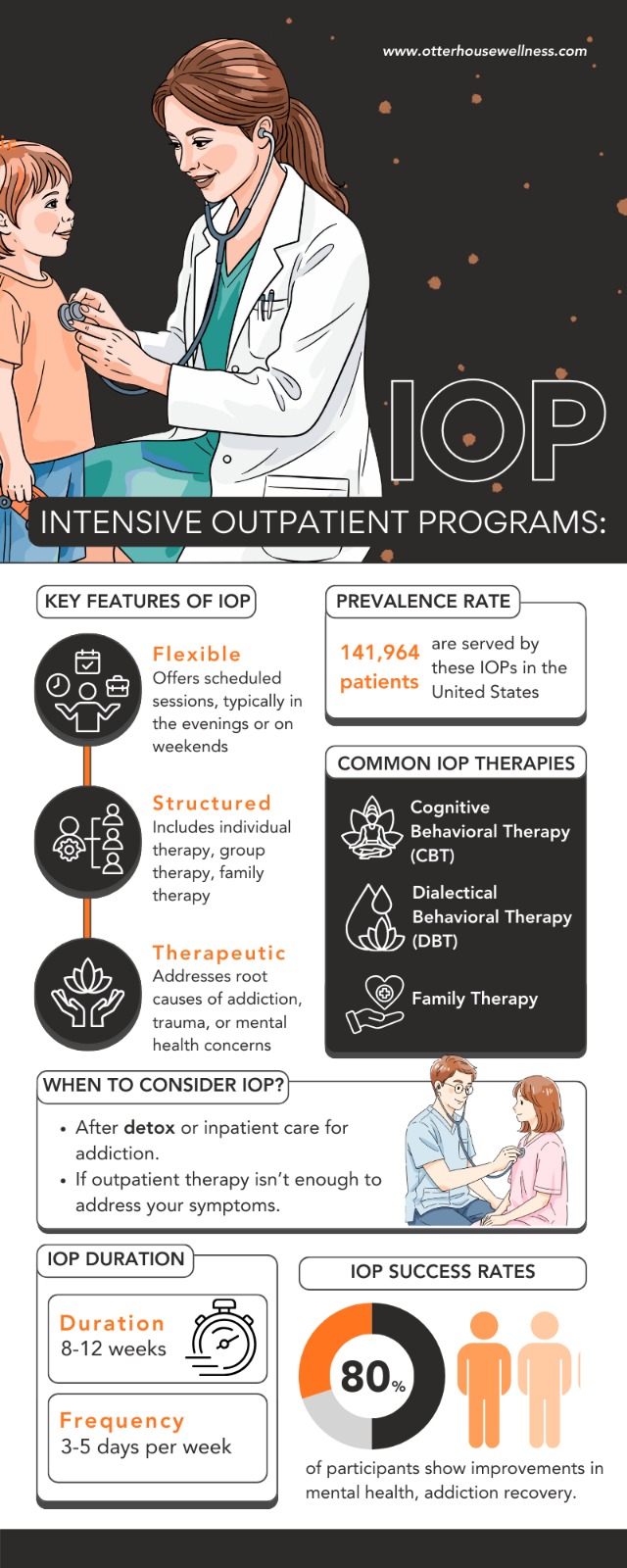
An Intensive Outpatient Program (IOP) is a type of behavioral health treatment that sits between regular outpatient therapy and inpatient care. It gives people more support and structure, but lets them sleep at home, keep jobs, attend school, and care for family.
Think of it as therapy on steroids, more frequent, more customized, and more supportive, but not full-time hospital care. Most Intensive Outpatient Programs meet multiple times each week, often three to five days, with nine to fifteen or more therapy hours weekly. Those hours usually include a combination of individual therapy focused on your personal challenges and group sessions where people learn skills while supporting one another.
Programs also include psychoeducation about coping strategies and emotional regulation, along with medication management when it’s clinically appropriate and necessary.
Many IOPs offer skills workshops that focus on stress management, healthier communication, emotional awareness, and realistic self-care practices for daily life. You don’t stay overnight in a facility, but you show up consistently, with intention and focus, to actively participate in your own healing process.
How IOP Works
Assessment and Personal Plan
Your journey starts with an assessment by a licensed clinician who listens without judgment. Based on your needs, they’ll create a personalized plan, so you don’t get generic care; you get care designed for you.
Structured Support, Life Included
Unlike weekly therapy that can feel slow, IOP gives rhythm, sessions that build on each other, community support from peers, and consistent check-ins on progress. You can still work, take care of family, and sleep in your own bed at night.
Evidence Behind the Approach
Studies show that people engaged in structured outpatient care like IOP attend nearly 2.3–2.7 sessions per week on average and complete about 14–16 treatment days per episode.
What Benefits You Can Expect
More Support Without Full Hospitalization
IOP lets you get the care you need without uprooting your life. You stay connected to your community, family, work, and routines, not in a hospital room.
Fewer Crises After Treatment
People who complete IOP are less likely to show up in the emergency room or be admitted to inpatient psychiatric care afterward, a huge win for long-term stability.
Skills You Can Use Forever
IOP doesn’t just patch problems; it gives you tools for life. You learn strategies that help you manage new challenges long after the program ends.
What Behavioral Health Care Looks Like in Onslow County
Onslow County’s mental health provider shortage means it can take longer to get traditional therapy appointments or specialized care. This is where IOP becomes especially important; it offers a more frequent, structured pathway to recovery without the full cost or disruption of hospital care.
Local Options
Several behavioral health providers in the region now offer Intensive Outpatient care, including virtual options for Onslow County residents. If you’re exploring options, Otter House Wellness provides resources and guidance to help you understand IOP services and take the next step toward care in a supportive, pressure-free way. You can learn more and explore possibilities by visiting.
Why This Matters to You
Life in Onslow County has its own rhythm. Long drives along Highway 17, early mornings heading toward Camp Lejeune, and afternoons that stretch between work, school pickups, and errands in Jacksonville. Many people here balance demanding jobs, military schedules, or rotating shifts while trying to keep families steady and connected. When stress builds, there isn’t always space in the day to pause and catch your breath.
IOP meets people where they actually live. It recognizes that healing has to happen alongside real life in Onslow County, school drop-offs, commutes, family dinners, and responsibilities that don’t pause just because you’re struggling.
Whether you’re living closer to Sneads Ferry, Richlands, or right in Jacksonville, consistent support that works around daily life matters. Community here is strong, but many people still carry things quietly. There’s often an unspoken expectation to “push through,” stay busy, and handle it yourself.
Behavioral Health IOP creates a space where you don’t have to perform strength. You can show up honestly, learn practical skills, and build stability without stepping away from the life you’re trying to protect.
Final Thoughts
There’s no easy way to admit you need more support, and there’s no single moment when things suddenly feel “bad enough.” Most of the time, it’s a quiet buildup of exhaustion, stress, emotional pain, or feeling stuck in the same patterns.
Behavioral Health IOP exists for that exact space in between, when weekly therapy doesn’t feel like enough, but life still needs you to show up.
IOP isn’t about labeling you or taking control away. It’s about giving you steadier ground, stronger tools, and consistent support, so healing becomes something you actively build, not something you keep postponing.
Otter House Wellness
January 28, 2026
- Rehab for Professionals in North Carolina (Executives, Business Owners)
 High performance often hides high stress. Learn how executive rehab programs in NC offer confidential recovery without stepping away from your responsibilities.
 - Private Rehab in Asheville, NC (Luxury Treatment Options)
 Why do so many people avoid rehab, even when they need it? The answer may lie in privacy, comfort, and outdated treatment models.
 - Mental Health Treatment Programs in Asheville, NC
 Is it stress, isolation, or something deeper? Explore what’s driving Asheville’s mental health crisis.
 - Medical Detox Near Asheville, NC
 Struggling to quit on willpower alone? Here’s why detox near Asheville may be the safer path forward.
 - Relapse Prevention Programs in Asheville, NC
 Learn how relapse prevention Asheville programs help you stay sober with 10 practical strategies and ongoing support in North Carolina.
 - Outpatient Rehab vs PHP vs IOP: Which Is Right for You?
 PHP vs IOP vs outpatient rehab explained. Learn which rehab program fits your needs and get guidance from Otter House Wellness in Asheville.
 - Dual Diagnosis Treatment in Asheville, NC (Complete Guide)
 Therapy helps. Rehab helps. But why do so many people relapse anyway? The answer may lie in what’s being missed.
Recommended Blogs


Rehab for Professionals in North Carolina (Executives, Business Owners)

Private Rehab in Asheville, NC (Luxury Treatment Options)