
Why So Many in Asheville Struggle Silently with Mental Health
In North Carolina, at least 1 in 5 adults suffers from a mental illness every year, but a majority of them do not receive the care they need. It is important to understand that the mental healthcare issues in Asheville – and NC on the whole – are not random. They are being caused due to a number of overlapping issues.
From limited access to mental healthcare to financial instability, and from social isolation to chronic stress, the socioeconomic structure of the region has pushed Asheville residents into a corner, causing them to struggle mentally.
As a result, the need for good-quality mental health treatment in Asheville is higher than ever. In today’s article, we will discuss what is causing this mental illness pandemic and how we can offer good mental health treatment in Asheville to counter the effects of mental illness. Let’s get started:
Why Are People in Asheville Struggling with Mental Health?
The growing need for mental health treatment in Asheville hasn’t begun randomly. For the last decade or so, residents of Asheville are facing economic stress, housing instability, social isolation, and limited access, which has led to severe anxiety and depression. As a result, a pandemic of mental health issues has arisen. Let’s talk about the four major causes driving this crisis:
1. Limited Access to Mental Health Care:
Sadly, North Carolina ranks 44th number in access to mental health services. The same issue translates for residents of Asheville as well. When an individual struggling with depression, anxiety, PTSD, or any other mental condition tries to reach out for mental health treatment in Asheville, they are simply met with long waitlists because access to mental healthcare is very limited.
This creates a very dangerous gap because even when people recognize they are struggling, the cost barriers, affordability, and lack of providers prevents them from getting the right support. As a result, existing mental conditions worsen, turning manageable stress into severe stress levels, anxiety, depression, or crisis-level disorders.
2. Economic Stress and Poverty:
Asheville residents have seen rising living costs, income inequality, housing instability, job insecurity, and financial pressure. All these factors directly impact their psychological well-being. The greater the financial stress, the more likely individuals are to go into depression, anxiety, substance use, and burnout.
Over time, this chronic pressure of financial strain erodes their emotional resilience and increases vulnerability to emotional distress and mental illness.
3. Social Isolation and Poor Mental Well-being:
More than 20% of adults in Asheville report 7+ days of poor mental health each month. The feeling of hopelessness and depression isn’t sudden; many residents experience deep isolation despite the seemingly vibrant culture of the city.
This isolation, chronic loneliness, emotional withdrawal, and lack of meaningful connection contribute heavily to mental health decline and result in coping mechanisms for the lack of support systems.
4. Trauma, Substance Use, and Co-Occurring Disorders:
Did you know that 1 in 4 overdose deaths in the state involve individuals with mental illness? Not surprising though, because most of the mental health challenges in Asheville are also closely linked to trauma, past experiences, and substance use. Millions of individuals struggle with co-occurring disorders on a regular basis.
The dependency on alcohol due to unresolved trauma, and mental health worsening because of substance use turns into a very vicious loop of dependence cycle. Without timely medical intervention, this destructive vicious cycle becomes extremely difficult to break.
The Solution: Otter Wellness for Mental Health Treatment in Asheville
Understanding the underlying mental health problem is just the first step. The real healing process starts only after we are able to provide the right kind of care and timely intervention. Otter Wellness understands this issue and treats mental healthcare not just as a set of symptoms, but also as a condition with a deep-rooted cause. This foundational approach allows us to bring a marked change in how treatment works.
When you sign up for mental health treatment in Asheville at Otter Wellness, here is what you can expect:
Client-Centered, Personalized Treatment:
Our mental health treatment in Asheville prides itself in using personalized treatment plans for each individual. No two journeys are the same, so it is impossible for one treatment regimen to be as effective for two unique individuals. This is why we take a thorough initial assessment and then plan your treatment plan according to your specific needs, goals, challenges, and recovery journey.
Integrated Dual Diagnosis Support:
At Otter Wellness, we understand that individuals often struggle with co-occurring disorders, which is why we provide integrated care for dual diagnosis treatment that treats both mental health conditions and substance use together for better outcomes. This integrated care approach helps us break the vicious cycle and provide you with a more sustainable, long-term recovery.
Evidence-Based and Holistic Therapies:
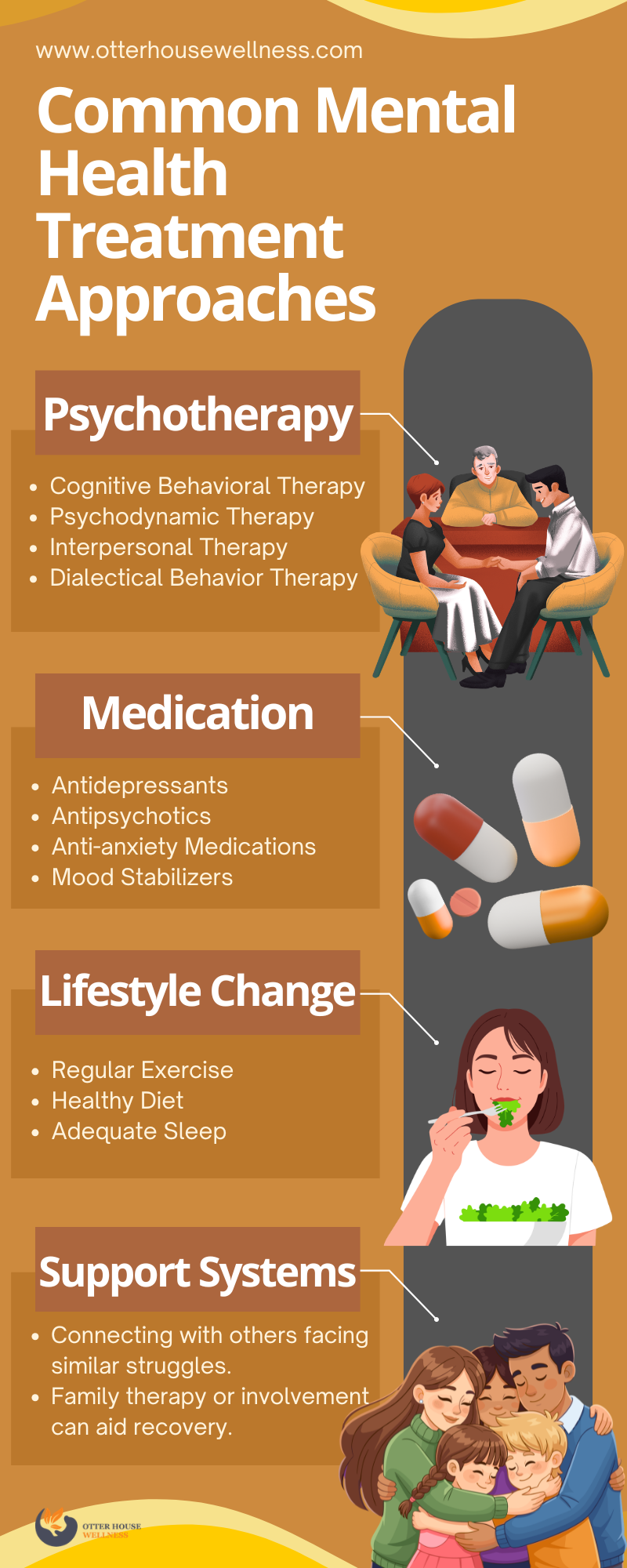
Our mental health treatment in Asheville is based on scientifically proven therapies such as CBT, group therapy, and DBT. We also take a holistic approach to healing which, combined with evidence-based therapy, provides you emotional support, mental clarity and coping skills for healing, growth and management of your condition. This whole-person approach focuses on healing rather than just managing symptoms.
Supportive, Structured, and Compassionate Environment:
In an environment where judgment is present and emotions are suppressed, healing simply cannot happen. Therefore, our mental health treatment in Asheville combines structure with support and compassion, keeping compassion at the core of every interaction. This allows individuals to open up to therapy and safely rebuild their confidence without fear or judgment.
Comprehensive Continuum of Care:
Understandably, recovery doesn’t occur overnight, and individuals require a smooth transition towards the next phase rather than being left to fend for themselves in isolation. Therefore, at Otter Wellness, we ensure smooth transitions for clients into the next care level you require. Whether it is therapy, counseling sessions, an outpatient program, aftercare support, or long-term support planning, we simply help you stay on track so that you can build a stable, healthier future.
Final Words
In Asheville, mental health challenges are arising due to a number of systemic issues, such as social isolation, economic pressures, and untreated trauma. The sad part is that access to quality mental healthcare is also limited.
Fortunately, Otter Wellness is now offering mental health treatment in Asheville that is intended to offer structured, compassionate, consistent care for the individuals who are struggling and suffering from mental health challenges.
If you or a loved one is struggling with any emotional distress or mental health challenge, don’t wait for things to get worse. Early intervention can prevent worsening and make all the difference. So pick up your phone and call Otter Wellness at (828) 373-2156 to speak with our team. Know that you are not alone, and we are here to help you begin your journey towards a better life and stable mental health.
Otter House Wellness
March 30, 2026
- Telehealth Therapy That Accepts Medicaid in North Carolina
 Tired of spending gas money and half a day driving to a therapist? Discover how NC Medicaid lets you see top providers from home with zero copay.
 - Group Therapy Covered by Medicaid in North Carolina
 Replaying the exact same thoughts at 2 AM with no way out? Discover how NC Medicaid fully covers the group therapy hack that breaks your mental loops.
 - Outpatient Mental Health Treatment for Medicaid Recipients in NC
 Did you know you don't need a doctor's referral to start therapy on NC Medicaid? Discover how to access fast, free mental health care from home.
 - Medicaid Mental Health Treatment for Parents and Families in NC
 You can't pour from an empty cup. Discover the "oxygen mask" rule in NC Medicaid that covers parent AND child mental health under one plan.
 - Mental Health Programs for Young Adults on Medicaid in North CarolinaDoes Rhode Island Medicaid cover treatment for addiction and depression? Find out what’s covered, from detox and residential care to PHP, IOP, therapy, and medication.
- ADHD Treatment That Accepts Medicaid in North Carolina
 Looking for ADHD treatment that accepts Medicaid in North Carolina? Learn about treatment options and how support can make daily life easier.
 - Bipolar Disorder Treatment Covered by Medicaid in NC
 Learn about bipolar disorder treatment covered by Medicaid in NC, including therapy, medication, Medicaid plans, and support options at Otter House Wellness.
Recommended Blogs


Telehealth Therapy That Accepts Medicaid in North Carolina

Group Therapy Covered by Medicaid in North Carolina