
Dual Diagnosis Treatment in Asheville, NC (Complete Guide)
When it comes to behavioral health care, one of the most difficult situations is when addiction co-occurs, not just substance use. Unfortunately, in Asheville, it is a common occurrence due to the opioid crisis, mental health gaps, and trauma exposure. Research suggests that with co-occurring disorders, over 40 – 60% individuals in Asheville have to seek help for the sake of survival. The majority of the population doesn’t even realize that individuals are struggling with PTSD, depression, and anxiety while also being dependent on opioids, prescription drugs, and alcohol.
The problem isn’t just the presence of these mental health conditions, but how deeply they are interconnected; anxiety often leads to substance use, and substance use worsens depression or causes mood instability. The reality is that trauma often sits underneath both, causing repeated cycles of relapse. Traditional behavioral therapy programs often address only one condition, which leads to temporary relief, but the chances of relapse are high. This creates a self-reinforcing loop that becomes impossible to break.
The solution to this problem is simple: i.e: dual diagnosis in Asheville, NC. With dual diagnosis in Asheville, NC, you can expect symptoms to stabilize and offer support for the recovery of continuity of long-term recovery. Today, let’s discuss how dual diagnosis in Asheville, NC, can address root causes and support recovery for the benefit of long-term stability.
Why Mental Health and Addiction Are Rising in Asheville, NC
Despite its scenic reputation, Asheville may be known for its natural beauty, but the reality on the ground is not the same. Residents of Asheville struggle with substance use and mental health challenges for the sake of survival.
- Ongoing Opioid Crisis: The ongoing opioid crisis in North Carolina has impacted many communities. Over thousands of people are exposed to prescription opioids, illicitly manufactured fentanyl, and stimulant misuse simply due to the availability of substances.
- Mental Healthcare Gap: The gap in mental healthcare is so bad that individuals have to wait for at least several weeks to receive early intervention care. When left untreated, mental illness results in worsening anxiety, depression, and even PTSD, which ends up overlapping with substance use.
- Trauma Exposure and Chronic Stress: From unstable housing to financial pressure, and from emotional isolation to community violence, residents of Asheville get overwhelmed and burned out as a result of chronic stress.
Why Traditional Treatment Often Falls Short
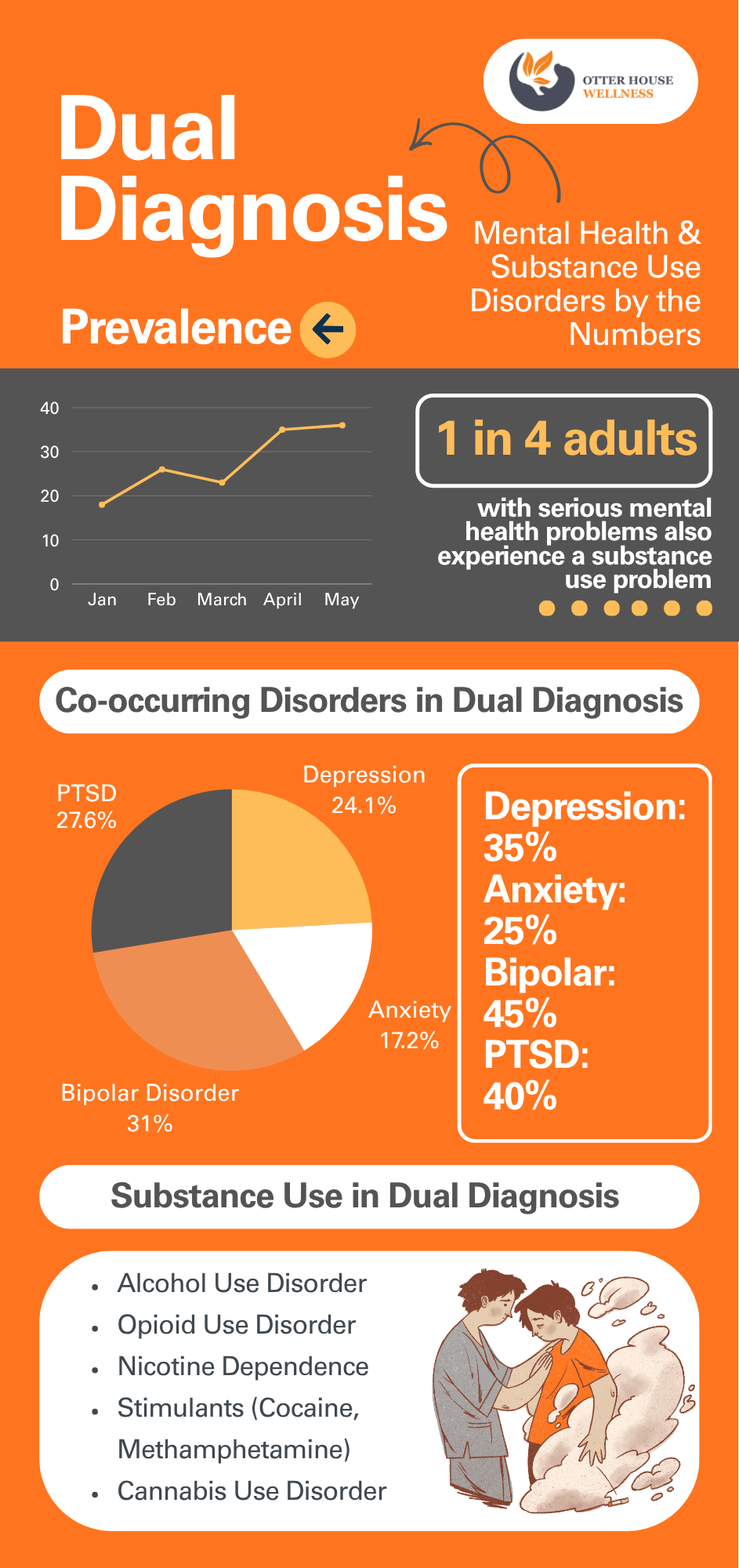
A major challenge in the way of dual diagnosis in Asheville, NC is that many mental health facilities still treat mental illness as a separate form of care from addiction treatment. For example: A person may receive therapy for depression but no support for the co-occurring substance use or they may get rehab treatment for substance use disorder but nobody addresses the anxiety disorder that exists alongside.
When treated in isolation, the remaining problem continues to fuel the other. This is why long-term recovery for individuals often feels out of reach for individuals with dual disorders. Instead, what is needed is an integrated care approach that considers and treats both conditions at the same time.
A More Complete Approach to Dual Diagnosis Treatment in Asheville, NC
This is where Otter Wellness comes in. Our dual diagnosis in Asheville, NC, like many other top-tier programs, is built to offer integrated care for individuals struggling with both mental health and substance use challenges together. At Otter Wellness, instead of separating conditions, we treat them as interconnected parts of the same whole condition.
What sets Otter Wellness apart is how we use evidence-based care to provide stabilization and long-term recovery for the treatment of co-occurring disorders.
- Integrated Mental Health and Addiction Care: Our dual diagnosis in Asheville, NC treats addiction with therapy, psychiatric support, and clinical care so that the treatment of one condition does not undermine the other treatment. As a result, when both sides of care are addressed, they are able to heal for the long-term without any interruption.
- Personalized Treatment Planning: We believe that one-size-fits-all doesn’t work here. The underlying trauma is the foundation to our treatment plans, which is why every individual taking treatment receives a tailored treatment plan based on their unique symptoms, treatment history, and recovery goals.
- Evidence-Based Therapies: Our dual diagnosis in Asheville, NC uses CBT, DBT, trauma-informed therapy, mindfulness, and group therapy to offer individuals the tools of recovery, which usually results in sustainable progress. The goal is to create a safe environment where clients can comfortably heal without any fear of judgment.
- Trauma-Informed Care: One of the biggest deterrents for anyone seeking treatment is the lack of a structured environment where healing can happen sustainably and gradually. This is why we work tirelessly to ensure that no pressure or judgment is placed on the individuals and they can recover without fear.
- Structured Levels of Care: At Otter Wellness, we understand how individuals require different levels of care. This is why we offer flexible programs, including PHP and IOP programs that are designed to provide clients with continuous support.
Understandably, recovery is not linear and requires support for individuals of the journey. With our dual diagnosis in Asheville, NC, we are addressing both simultaneously, which helps individuals to:
- Break the cycle of self-medication
- Stabilize their emotional mood and gain emotional regulation
- Build healthier and sustainable coping strategies
- Create a strong foundation for long-term recovery
A Path Toward Real Recovery
Dual diagnosis is a complicated condition that can often feel overwhelming; not only because of symptoms but because of the way it is treated for the majority of cases. Individuals struggling with co-occurring disorders require the right support system that not only treats addiction but also understands the importance of the need for the integration of care, which causes relapse to continue.
At Otter Wellness, we have built a comprehensive dual diagnosis in Asheville, NC, which is an integrated approach towards healing. With our clinical expertise and compassionate care, our team works closely to offer individuals with structure and support. This program is designed to support recovery for the benefit of long-term stability.
So, if you or someone you care are suffering and struggling with dual disorder, know that help is available and within reach. Call us now at (828) 373 – 2156 and gain support that is focused on your recovery as well as guidance for the sake of healing.
Otter House Wellness
March 28, 2026
- Telehealth Therapy That Accepts Medicaid in North Carolina
 Tired of spending gas money and half a day driving to a therapist? Discover how NC Medicaid lets you see top providers from home with zero copay.
 - Group Therapy Covered by Medicaid in North Carolina
 Replaying the exact same thoughts at 2 AM with no way out? Discover how NC Medicaid fully covers the group therapy hack that breaks your mental loops.
 - Outpatient Mental Health Treatment for Medicaid Recipients in NC
 Did you know you don't need a doctor's referral to start therapy on NC Medicaid? Discover how to access fast, free mental health care from home.
 - Medicaid Mental Health Treatment for Parents and Families in NC
 You can't pour from an empty cup. Discover the "oxygen mask" rule in NC Medicaid that covers parent AND child mental health under one plan.
 - Mental Health Programs for Young Adults on Medicaid in North CarolinaDoes Rhode Island Medicaid cover treatment for addiction and depression? Find out what’s covered, from detox and residential care to PHP, IOP, therapy, and medication.
- ADHD Treatment That Accepts Medicaid in North Carolina
 Looking for ADHD treatment that accepts Medicaid in North Carolina? Learn about treatment options and how support can make daily life easier.
 - Bipolar Disorder Treatment Covered by Medicaid in NC
 Learn about bipolar disorder treatment covered by Medicaid in NC, including therapy, medication, Medicaid plans, and support options at Otter House Wellness.
Recommended Blogs


Telehealth Therapy That Accepts Medicaid in North Carolina
Group Therapy Covered by Medicaid in North Carolina