
Why Talk Therapy Sometimes Stops Working and How North Carolina IOP in Forsyth County Fixes That
Talk therapy is great for self-discovery and managing life’s daily burdens. But you can unload and learn only so much in one hour a week. When your mental health struggles are overwhelming, that occasional session can feel like trying to empty an ocean with a bucket.
No matter how great your therapist is and how well the sessions usually go, if you don’t feel a sustainable change, it shows that the intensity of your situation has outpaced the level of care you are receiving.
Also, therapy can sometimes feel repetitive, where you talk about the same cycles every week, but then you go back into the environment that triggers those habits. Needless to say, those gaps between sessions allow symptoms to resurface, and moving past this plateau requires more than just conversation.
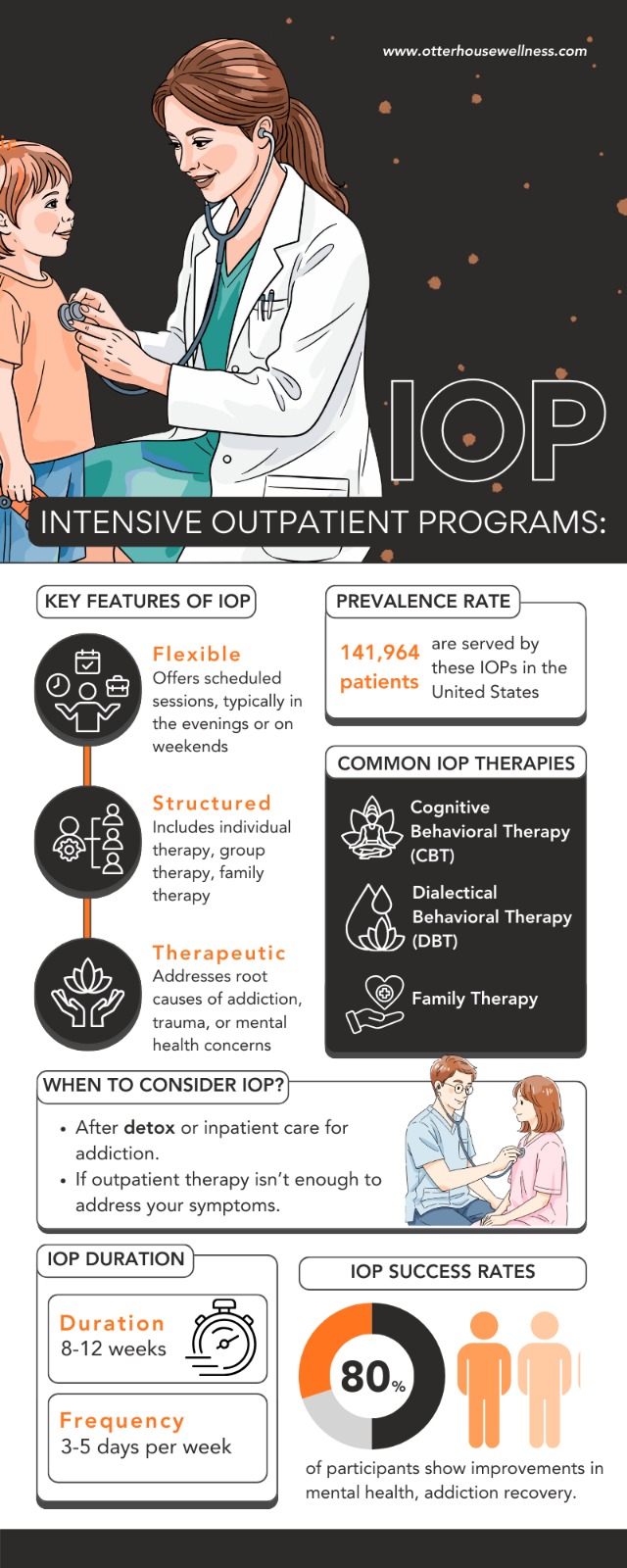
That’s when North Carolina IOP in Forsyth County can help break those deep-rooted patterns. This blog explains how IOP adds the necessary strength to your recovery plan. Keep reading!
The Neurological Wall
When you are trapped in high anxiety or PTSD, your body exists in a state of constant high alert, and you cannot reason with it. This ‘active’ state means your prefrontal cortex (the logical part of the brain) is offline, and there is a frustrating disconnect.
Let’s put it this way: You sit in your weekly therapy session and understand the logic of what your therapist says. However, your body refuses to believe it, which essentially means you are trying to use words to solve a big problem happening in your nervous system.
Eventually, you hit a wall because your system is flooded with cortisol and adrenaline. It also means the information from a talk therapy session never reaches the amygdala, which is the brain’s emotional and survival center.
So even though the regular therapy hour leaves you with enough information about what to do, your body still feels in danger. Add in the distance between two therapy sessions, and there’s way too much time for your brain to stay out of survival mode. And since the nervous system is mostly spiked, the therapeutic insights never actually sink in or create lasting change.
Luckily, the North Carolina IOP in Forsyth County fixes this. It changes the frequency of the reps because to move the brain from a state of survival back into a state of safety, you need consistent regulation.
So when you engage in therapy frequently, your nervous system gets that sustained calm it needs to rewire itself. This increased intensity during North Carolina IOP in Forsyth County also allows your brain to stay out of high alert long enough for the therapy to reach the emotional centers that need it most.
The Dose-Response Problem
In medicine, if you have a severe infection, a low dose of antibiotics won’t kill the bacteria; it makes it stronger. This analogy loosely applies to your mental health because if you were fighting a severe infection, you wouldn’t take a dose of antibiotics once a week and expect to recover. Instead, you would follow a routine to ensure the medicine overcomes the bacteria.
Quite the opposite happens when your mental health struggles are severe, yet you rely on therapy only. But know that your recovery is a dose-response situation, where the treatment must be strong enough to trigger a change in your system.
If we put regular therapy into numbers, you spend 1 out of 168 hours a week in the therapist’s office. The remaining time? You spend it all in the same high-stress environment that caused your burnout or relapse.
In contrast, the North Carolina IOP in Forsyth County works as a “full course” of treatment. It increases your clinical time to 9 or 15 hours a week to ensure enough repetition that challenges your old habits and builds new neural connections.
You Can’t Heal in Isolation
Humans are biologically wired to regulate their emotions through others, something we can call co-regulation. Your brain makes it possible with mirror neurons, which are brain cells that fire when you perform an action as well as when you watch someone else do it.
If you happen to “absorb” the calm or coping skills of the people around you, know that it’s your mirror neurons at work. But if you try to heal in total isolation, you are only fighting your biological programming.
In standard one-on-one therapy, you only have one person to work with, and even though that relationship is valuable, it lacks the social diversity your brain needs to unlearn deep-rooted habits. Therefore, your mirror neurons are activated during the North Carolina IOP in Forsyth County.
For example, when you see a peer process a similar trauma, your brain literally practices that same resilience by observing them. This collective environment creates a healing feedback loop that speeds up recovery in a way that sitting alone with a professional cannot replicate.
This social-biological requirement for healing is critical because local trends show a significant rise in isolation-related mental health crises. Therefore, a group-based model can help jumpstart your brain’s recovery.
There’s Always a Way Out
If your progress has stalled, it means your brain is asking for a different environment and a stronger dose of support. Healing is a biological process as much as an emotional one, and sometimes that process requires more effort. Also know that stepping into a more intensive model means you prioritize your well-being.
This treatment will work around how your nervous system heals, so you stop fighting against your biology and start moving toward a life that feels manageable again.
If you’re ready to break the cycle and find a way out of this darkness, the team at Otter House Wellness is here to help. We’d love to chat and help you figure out the best next step for your journey.
Otter House Wellness
January 27, 2026
- Veterans and Military Mental Health Treatment Alexander County, NC
 Unearthing Resilience: Why Alexander County Veterans Head West for Specialized Healing Alexander County is a place where family roots run deep. Whether you are in the apple orchards of Taylorsville or the peaceful farms of Hiddenite, the spirit of this community is built on its rural heritage. Our veterans are the backbone of this community,… Read more: Veterans and Military Mental Health Treatment Alexander County, NC
 - Veterans and Military Mental Health Treatment Gaston County, NC
 The Anchor’s Strength: Reinforcing Mental Wellness for Gaston County Veterans Gaston County is a place of enduring legacies. Whether you live in the historic neighborhoods of Gastonia, raise a family in Belmont, or enjoy the quiet of Cherryville, your role as a provider is likely central to who you are. You are the steady hand.… Read more: Veterans and Military Mental Health Treatment Gaston County, NC
 - Veterans and Military Mental Health Treatment Catawba County, NC
 The Industrious Soul: Strengthening Veteran Resilience in the Catawba Valley Is a 15-minute VA check-in enough for complex trauma? Discover why some veterans are choosing a smaller, more personalized alternative. Catawba County was built by makers. From the furniture craftsmen of Hickory to the textile pioneers of Newton, this region defines what it means to… Read more: Veterans and Military Mental Health Treatment Catawba County, NC
 - Mental Health Outpatient Treatment Options Buncombe County, NC
 Beyond the ER: Smarter Mental Health Support for Buncombe County Residents Buncombe County, NC has faced 50 suicides annually in the last five years. The situation is so bad that suicide has become the second leading cause of death in North Carolina residents aging from 10 to 19. The sad part is, it is no… Read more: Mental Health Outpatient Treatment Options Buncombe County, NC
 - Mental Health Outpatient Treatment Options Forsyth County
 4.4 Days a Month: Inside the Mental Health Strain Facing Forsyth County Recent reports have shown that Forsyth County residents struggle with 4.4 poor mental health days per month. At the same time, the severe shortage of qualified mental health providers is a problem and 282 individuals are assigned to one clinician. This imbalance contributes… Read more: Mental Health Outpatient Treatment Options Forsyth County
 - Veterans and Military Mental Health Treatment Mecklenburg County, NC
 The Strategic Reset: Why Mecklenburg County Veterans Choose Otter House for Performance-Based Recovery Mecklenburg County is the heartbeat of the New South. Between the corporate towers of Uptown Charlotte and the burgeoning tech scene in South End, veterans are transitioning into some of the most competitive roles in the country. You trade the uniform for… Read more: Veterans and Military Mental Health Treatment Mecklenburg County, NC
 - Veterans and Military Mental Health Treatment Wake County NC
 The Mountain Sanctuary: Why Wake County Veterans Choose Otter House for Trauma & Recovery Wake County is home to North Carolina’s largest veteran community. Veterans are the backbone of our region. You serve, you return, and you build lives here. But the “busy” life of the Triangle often makes it difficult to find the stillness… Read more: Veterans and Military Mental Health Treatment Wake County NC
 - Mental Health Outpatient Treatment Options Guilford County, NC
 Is Outpatient Treatment the Answer to Guilford County’s Mental Health Gap? Mental health challenges are increasingly affecting the residents of Guilford County, NC. Studies have repeatedly shown that over 15% of adults in the county have unmet mental health needs. The critical gap of consistency with access to care. From rising stress to chronic worry… Read more: Mental Health Outpatient Treatment Options Guilford County, NC
 - Mental Health Outpatient Treatment Options Mecklenburg County, NC
 Mental Health in Mecklenburg County: What Outpatient Treatment Really Looks Like Mecklenburg County, a balanced mix of scenic areas and bustling urban energy, is seemingly all charm and opportunity. But more than 25% of its residents struggle with crippling depression. From job insecurity to traffic congestion, and from social isolation to neighborhood crime, all contribute… Read more: Mental Health Outpatient Treatment Options Mecklenburg County, NC
 - Mental Health Outpatient Treatment Options Wake County NC
 Not Sure Where to Start? Mental Health Options in Wake County Explained For many years, mental health challenges have affected individuals and families throughout North Carolina. The statewide prevalence has reached up to 1 in 5 residents now. Yet many people still don’t seek treatment; mainly because they don’t know where to begin. For residents… Read more: Mental Health Outpatient Treatment Options Wake County NC
Recommended Blogs


Veterans and Military Mental Health Treatment Alexander County, NC
Unearthing Resilience: Why Alexander County Veterans Head West for Specialized Healing Alexander County is a…

Veterans and Military Mental Health Treatment Gaston County, NC
The Anchor’s Strength: Reinforcing Mental Wellness for Gaston County Veterans Gaston County is a place…

Veterans and Military Mental Health Treatment Catawba County, NC
The Industrious Soul: Strengthening Veteran Resilience in the Catawba Valley Is a 15-minute VA check-in…