
Medicaid Mental Health Treatment for Parents and Families in NC
Every parent has heard the airplane instruction: secure your own oxygen mask before helping anyone else with theirs. Almost no parent actually does this. You go the other way, quietly rationing your own air so there’s enough left over for everyone smaller than you. Eventually that math stops working.
North Carolina Medicaid was not built around the assumption that you’ll get to your own mental health eventually, once the kids are fine. It covers both at once, on purpose, because a family isn’t really two separate cases. It’s one household under one roof, and the coverage reflects that.
Who Qualifies, and What That Looks Like on Paper
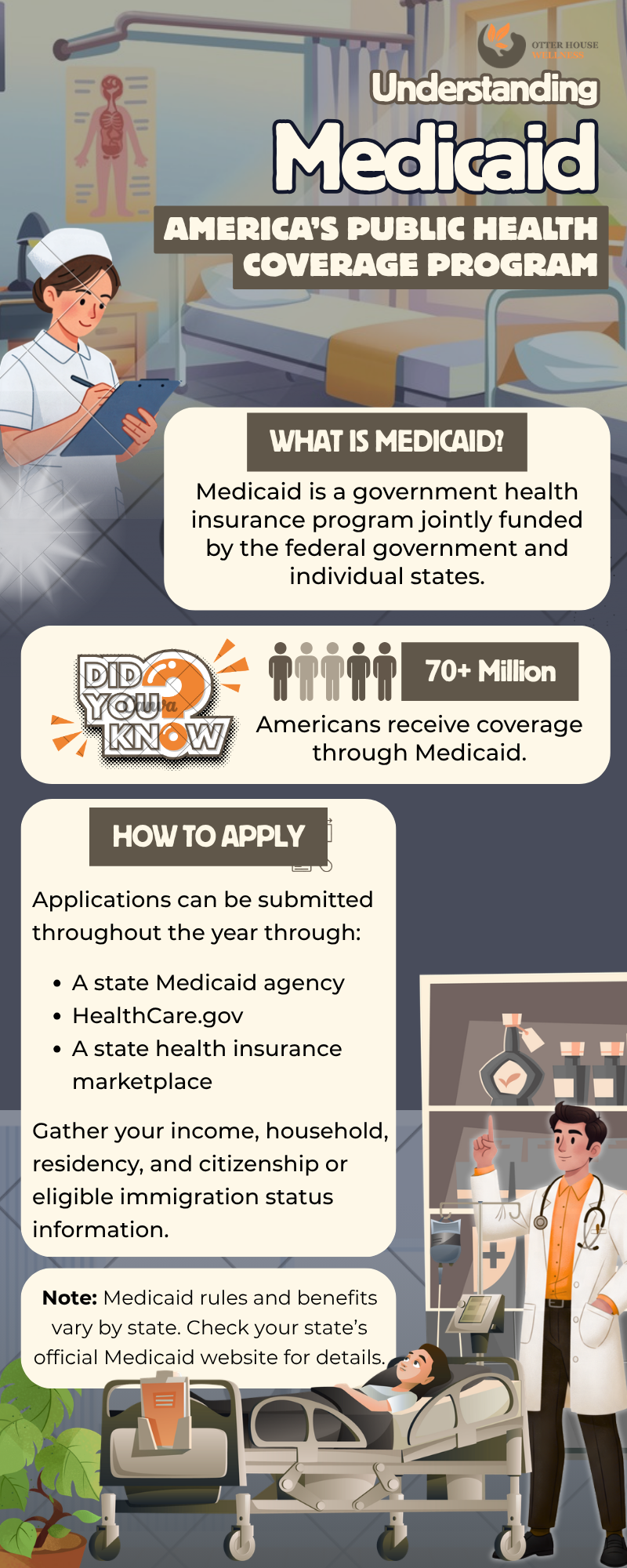
Since North Carolina expanded Medicaid, parents are no longer squeezed out by the old income cliffs that used to disqualify anyone who wasn’t raising kids in poverty. Adults up to 138% of the federal poverty level qualify now; no asset test attached. For a two-parent household with two kids, that threshold works out to roughly $3,700 a month, which is a meaningfully higher bar than it used to be.
Eligibility for both you and your children runs through the same income-based methodology, so you’re not filling out two different applications with two different rulebooks. Most families land in a Standard Plan, which covers therapy, psychiatric care, and medication management. Families managing something more complex, like a serious mental illness or a child with significant behavioral health needs, are routed into a Tailored Plan instead. The services available don’t shrink either way. The difference is who is coordinating it.
Getting Your Own Care Covered In NC
Individual therapy is covered. So is psychiatric evaluation and ongoing medication management, at no cost for most members. Depression, anxiety, PTSD, and bipolar disorder are treated as the medical conditions they are, under North Carolina’s mental health parity law, which requires equal coverage on the same terms as any physical illness.
New parents get something worth knowing about specifically. NC Medicaid extended postpartum coverage from 60 days to a full 12 months and built in up to four depression screenings across that window. Roughly 14% of women in the state experience postpartum depression, and North Carolina has historically ranked poorly on both maternal and infant mortality. The extended window exists because 60 days was never long enough for something that often doesn’t even surface until month four or five, well past the point most insurance used to disappear.
Support That Comes to Your Child, With You in the Room
When a child’s struggles are bigger than what a weekly outpatient appointment can hold, NC Medicaid covers home-based treatment models built specifically to keep the family together rather than separate it. Family Centered Treatment and Intensive In-Home Services send a clinical team into your living room, on your schedule, instead of asking you to rebuild your week around a clinic.
The part that tends to surprise most parents is that you’re not a waiting-room bystander in either model. You’re a required participant. Intensive in-home services are authorized around a single child, but the plan is built with you actively involved, not delivered to your child in isolation. Family Centered Treatment goes a step further and has the family define its own constellation. That means you get to determine who’s truly a part of this treatment plan, beyond just the person named on the referral before treatment even starts. The stated goal of both is blunt: fewer children removed from their homes, more families given the tools to stay intact through something hard.
When There’s No Time to Wait
Not every rough patch needs a hospital. 988 connects you to a live crisis counselor any hour of the day, for you or on behalf of your child. Mobile crisis teams operate statewide and can come to you rather than requiring an ER visit to get seen. Every regional managed care organization also runs its own 24/7 behavioral health crisis line, and none of these require an existing diagnosis or a provider already on file before you’re allowed to use them.
Why Splitting the Two Apart Doesn’t Work
Treating a parent’s depression and a child’s behavioral problems as discrete cases misses the way families function. When a parent finally gets to sleep and is stable, they tend to show up differently for a kid working through something hard.
Similarly, when a child gets real support, it often takes some of the burden that a parent has been silently carrying by themselves. NC Medicaid’s structure is not sentimental about that; it is practical. Medicaid knows coverage that only touches half of a household doesn’t move the needle much.
Getting Started In North Carolina
Since December 2022, families with more complex behavioral health needs have been able to access Tailored Care Management. It offers you one dedicated care manager instead of you having to coordinate five different providers yourself. That person can be a liaison to get your child’s IEP or 504 plan at school, help keep your therapist and your child’s therapist talking to each other regularly, and generally take the logistics off your plate.
If you are unsure of your plan, or if you are already eligible, your local LME/MCO can check for you directly. If a claim gets denied along the way, it’s a starting point for an appeal, not the end of the conversation.
What Care at Otter House Wellness Looks Like
Otter House Wellness tackles both sides of this in one place nestled in the Blue Ridge Mountains just outside Asheville. Programs step down from partial hospitalization to intensive outpatient to regular outpatient so that the amount of support you get is exactly where your family is at that moment, not some set point everyone is thrown into.
Family therapy is an important part of treatment, along with individual and group work. The program incorporates dual diagnosis treatment, rather than treating it as an add-on, because mental health struggles and substance use rarely come up alone. Also, care is clinically supervised by psychiatric nurse practitioners and collaborating psychiatrists and provided on a day-to-day basis by licensed therapists. The first conversation at Otter House is always free!
Final Words
You can’t just pour from an empty cup, and North Carolina built its Medicaid coverage around that fact instead of ignoring it. Getting support here isn’t choosing between your own mental health and your child’s. It’s the same plan, covering both, at the same time.
If you’re ready to see what that could look like for your family, visit Otter House Wellness to check your coverage and talk through your options.
Otter House Wellness
August 23, 2026
- Telehealth Therapy That Accepts Medicaid in North Carolina
 Tired of spending gas money and half a day driving to a therapist? Discover how NC Medicaid lets you see top providers from home with zero copay.
 - Group Therapy Covered by Medicaid in North Carolina
 Replaying the exact same thoughts at 2 AM with no way out? Discover how NC Medicaid fully covers the group therapy hack that breaks your mental loops.
 - Outpatient Mental Health Treatment for Medicaid Recipients in NC
 Did you know you don't need a doctor's referral to start therapy on NC Medicaid? Discover how to access fast, free mental health care from home.
 - Medicaid Mental Health Treatment for Parents and Families in NC
 You can't pour from an empty cup. Discover the "oxygen mask" rule in NC Medicaid that covers parent AND child mental health under one plan.
 - Mental Health Programs for Young Adults on Medicaid in North CarolinaDoes Rhode Island Medicaid cover treatment for addiction and depression? Find out what’s covered, from detox and residential care to PHP, IOP, therapy, and medication.
- ADHD Treatment That Accepts Medicaid in North Carolina
 Looking for ADHD treatment that accepts Medicaid in North Carolina? Learn about treatment options and how support can make daily life easier.
 - Bipolar Disorder Treatment Covered by Medicaid in NC
 Learn about bipolar disorder treatment covered by Medicaid in NC, including therapy, medication, Medicaid plans, and support options at Otter House Wellness.
Recommended Blogs


Telehealth Therapy That Accepts Medicaid in North Carolina

Group Therapy Covered by Medicaid in North Carolina