
How to Use Medicaid for Mental Health Treatment in NC?
If you have Medicaid in North Carolina, you can get mental health treatment. This includes therapy, substance use services, and other support for your mental well-being. The main challenge isn’t having coverage; it’s knowing how to use it.
According to research by PubMed Central, nearly 95.6% of patients reported that they had at least 1 barrier to mental health access, which includes being unsure how to access care.
However, even if you have Medicaid, trying to understand insurance, find providers, and choose the right type of treatment can feel overwhelming, especially when you are already dealing with stress, anxiety, depression, or other mental health challenges.
The good news is that getting started is often much easier than most people expect!
This guide will walk you through the steps on how to use Medicaid for mental health treatment in NC and help you understand what to expect along the way.
Step 1: Confirm Your Medicaid Coverage
Before scheduling treatment, first check that your Medicaid coverage is active and know which plan you have.
Before reaching out for treatment, it is a good idea to have your Medicaid card nearby. It includes important information about your coverage and plan that providers may need when checking your benefits or scheduling services.
If you are unsure about your benefits, many treatment centers can help verify your coverage for you. At Otterhouse Wellness, our team can help you understand your Medicaid benefits and explain which services are available through your coverage.
Step 2: Understand What Services Medicaid May Cover
North Carolina Medicaid covers a variety of mental health treatment services, including:
- Individual therapy
- Group therapy
- Family counseling
- Medication management
- Substance use treatment
- Intensive Outpatient Programs (IOPs)
- Other behavioral health services
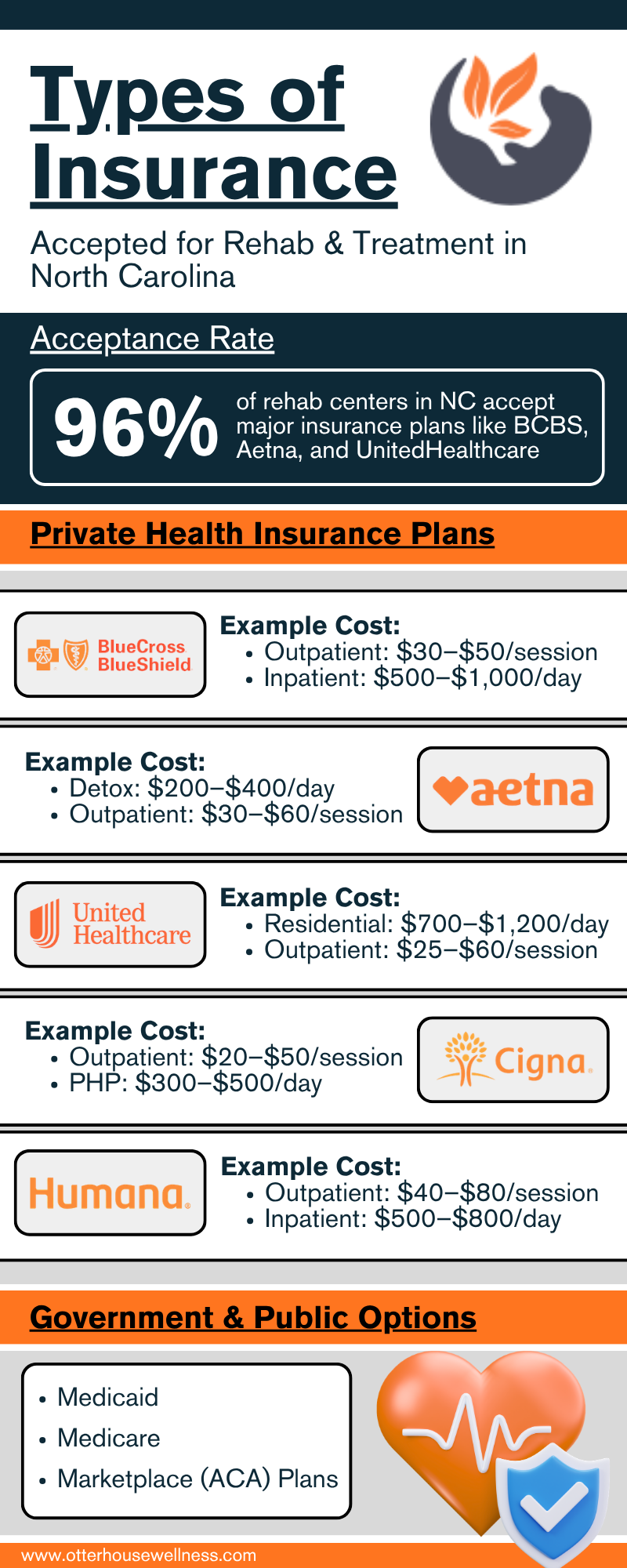
The services available to you may vary depending on the programs and benefits available in your Medicaid plan. To better understand your options and find the level of care that best fits your situation, contact a treatment provider.
Step 3: Find a Mental Health Provider That Accepts Medicaid
Not all therapists, counselors, or treatment centers accept Medicaid, so it is important to find a provider that works with your specific plan before starting treatment.
You can begin by:
- Contacting your Medicaid plan directly
- Searching online for provider directories
- Asking healthcare providers for referrals
- Contacting treatment centers that accept Medicaid
When searching for providers, you should always ask about the services they offer, how they go about treatment, appointment availability, and whether they accept your specific Medicaid plan.
At Otterhouse Wellness, our team answers questions about Medicaid coverage, available treatment options, and the services that may best fit your needs.
Step 4: Schedule an Initial Assessment
Most mental health treatment programs start with an assessment or intake appointment. This initial meeting gives you a chance to talk about what you have been experiencing, your goals for treatment, and any concerns you may have. It also helps the team better understand your needs and recommend the treatment option that may be most helpful for you.
The assessment may include questions about:
- Your mental health symptoms
- Stressors in your life
- Medical history
- Substance use
- Previous treatment experiences
- Current goals for recovery and wellness
There are no right or wrong answers during an assessment. The goal is simply to understand how to best support you.
Step 5: Begin Your Treatment Plan
Once your assessment is complete, your team will work with you to create a personalized treatment plan.
This may include:
Individual Therapy: One-on-one counseling sessions with a licensed therapist to help you manage symptoms, understand emotions, and learn healthy coping skills.
Group Therapy: Supportive sessions where individuals learn from others facing similar challenges while building healthy communication and coping skills.
Medication Management: For some individuals, medication may be included as part of treatment. In medication management, providers evaluate symptoms, prescribe medications, and monitor progress.
Intensive Outpatient Programs (IOPs): If you need more support than weekly therapy, an Intensive Outpatient Program can offer a higher level of care while you continue living at home.
Treatment plans are not set in stone. As your needs change, your team can adjust your plan to help you continue making progress.
Common Questions About Using Medicaid for Mental Health Care
Will I Have to Pay for Therapy?
Many Medicaid-covered mental health services are available at little to no cost for eligible individuals. Because coverage can vary based on your plan, it is a good idea to verify your benefits before starting treatment so you know what services are available to you.
Can I Use Medicaid for Therapy?
Yes. Medicaid often covers individual therapy, group therapy, family counseling, and other behavioral health services when they are medically necessary.
What If I Need More Than Weekly Therapy?
Many Medicaid plans cover higher levels of care, including Intensive Outpatient Programs and other treatment options for individuals who need additional support.
What If I Am Not Sure What Type of Treatment I Need?
That is completely normal. You can go for an initial assessment so that your provider can better understand your needs and recommend treatment that may be best for your situation.
Mental Health Treatment at Otterhouse Wellness
Getting help for your mental health should not have to feel confusing or out of reach. At Otterhouse Wellness, we help make the process easier by guiding you on how to use Medicaid for mental health treatment in NC, explaining your treatment options, and connecting you with the support that fits your needs.
Whether you are struggling with anxiety, depression, stress, trauma, substance use concerns, or simply feel stuck, our team is here to help you find a path forward. From your first conversation with us, you will be met with compassion, understanding, and a personalized approach to care.
No matter where you are in your journey, taking the first step can make a meaningful difference.
Reach out to us today to learn more about your options and start building a healthier, more balanced future.
Otter House Wellness
June 16, 2026
- Telehealth Therapy That Accepts Medicaid in North Carolina
 Tired of spending gas money and half a day driving to a therapist? Discover how NC Medicaid lets you see top providers from home with zero copay.
 - Group Therapy Covered by Medicaid in North Carolina
 Replaying the exact same thoughts at 2 AM with no way out? Discover how NC Medicaid fully covers the group therapy hack that breaks your mental loops.
 - Outpatient Mental Health Treatment for Medicaid Recipients in NC
 Did you know you don't need a doctor's referral to start therapy on NC Medicaid? Discover how to access fast, free mental health care from home.
 - Medicaid Mental Health Treatment for Parents and Families in NC
 You can't pour from an empty cup. Discover the "oxygen mask" rule in NC Medicaid that covers parent AND child mental health under one plan.
 - Mental Health Programs for Young Adults on Medicaid in North CarolinaDoes Rhode Island Medicaid cover treatment for addiction and depression? Find out what’s covered, from detox and residential care to PHP, IOP, therapy, and medication.
- ADHD Treatment That Accepts Medicaid in North Carolina
 Looking for ADHD treatment that accepts Medicaid in North Carolina? Learn about treatment options and how support can make daily life easier.
 - Bipolar Disorder Treatment Covered by Medicaid in NC
 Learn about bipolar disorder treatment covered by Medicaid in NC, including therapy, medication, Medicaid plans, and support options at Otter House Wellness.
Recommended Blogs


Telehealth Therapy That Accepts Medicaid in North Carolina

Group Therapy Covered by Medicaid in North Carolina