
How Much Support Is “Enough” for Mental Health? Wake County’s IOP Answer
Let’s talk about a heavy reality: nearly 22.5% of adults in North Carolina have ever been told by a professional that they have a depressive disorder. We know you often feel like you’re the only one failing to keep up. But in reality, you’re a part of a community that is under immense pressure, and it’s translated as poor mental health.
Reasons people in NC are facing a mental health crisis include the ever-increasing costs of living and the hustle culture that doesn’t let us take a breather. So when you’re also part of a rat race with no end in sight, your mental strength takes a hit.
And when you combine this with the fact that finding a therapist here is almost like a part-time job, many go without seeking any reliable help. Therefore, things like an intensive outpatient program in Wake County, NC, deserve more attention because they’re fixing actual problems.
Keep reading to know how an intensive outpatient program in Wake County, NC, gives you the level of support that matches the weight you’re carrying.
How Does an Intensive Outpatient Program in Wake County, NC, Work?
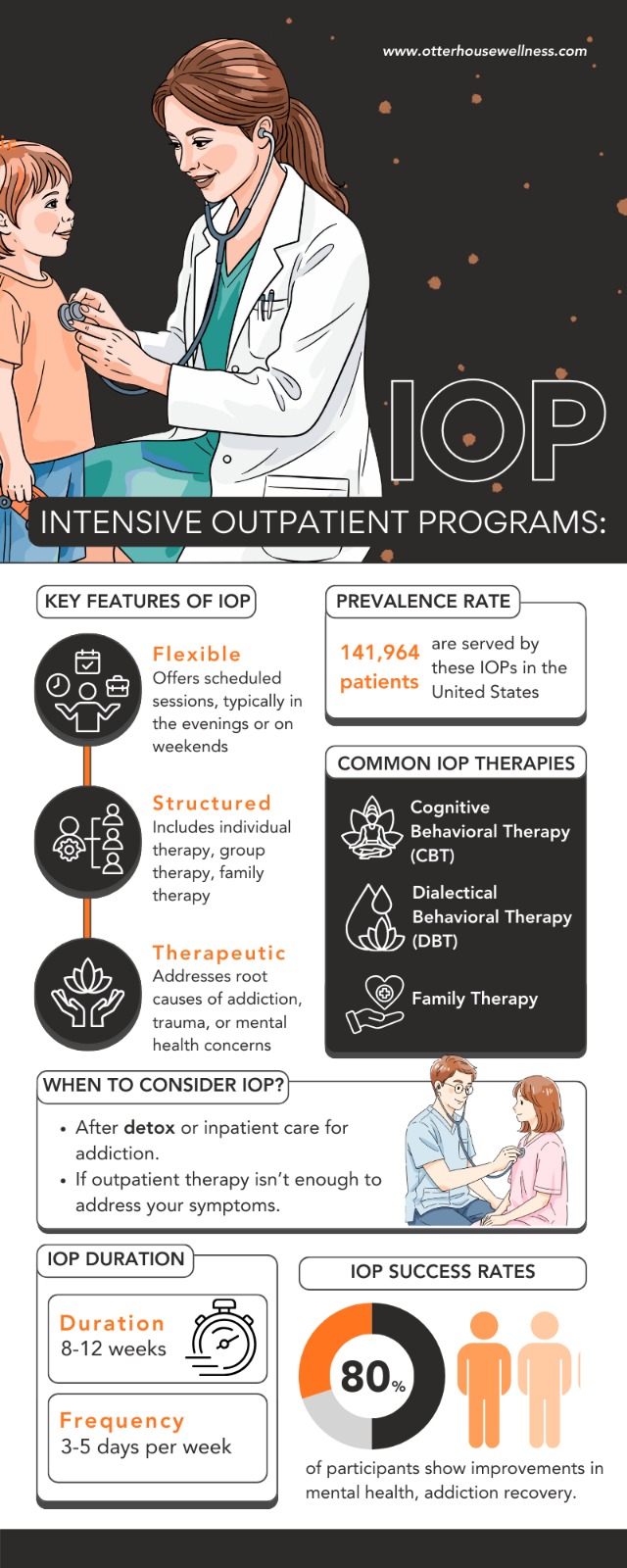
An intensive outpatient program in Wake County, NC, is the level of care between occasional therapy and full-time residential rehab. It simply means that you’ll live at home to maintain your daily routine but attend multiple clinical sessions each week at a local behavioral health center.
Here is how the intensive outpatient program in Wake County, NC, usually goes:
- Time Commitment: 9 to 15 hours weekly.
- Frequency: 3 to 5 days a week, with mostly 3-hour sessions.
- Duration: Most programs last 8 to 12 weeks, depending on your progress.
Since IOP sessions run in the morning or evening, you can accommodate your life commitments. Instead of pausing things to get mental health support or feeling helpless because of scattered sessions, you find a middle ground. Due to an intensive outpatient program in Wake County, NC, you stay present in your life and also meet mental health experts on the regular, so your well-being is never neglected.
Signs an Intensive Outpatient Program in Wake County, NC, is the Right Fit for You
An intensive outpatient program in Wake County, NC, does sound like a solid plan when you want to heal without feeling too restricted. But is it really right for your current situation? Here are some signs that make IOP the right fit (if they don’t feel relatable enough, you’ll have to take your level of care a notch up or down):
1 Hour a Week Worth of Therapy Isn’t Enough
Standard weekly therapy is a cookie-cutter approach, which can fail when you face a real crisis. A 50-minute session offers little more than a brief check-in, and if you spend that entire hour only venting about your week, you never reach the work of healing.
Since all this leaves you to handle things until your next session alone, you likely need an intensive outpatient program in Wake County, NC. In this program, you receive 9 to 15 hours of professional support instead of 1 hour.
Surely, this structure moves you past surface-level talk and into active recovery because you have the time to learn a specific skill, apply it in your life, and refine it with an expert the next day. So if you feel like you are merely surviving between appointments, your current care plan is insufficient, and you need an intensive outpatient program in Wake County, NC.
You’re ‘High-Functioning’ but Exhausted
Being high-functioning means you maintain your external responsibilities because you are bound, even though you’re exhausted and desperately need help. It means you’re performing the duties of an average adult while feeling like you are wearing a heavy lead suit. And sadly, this struggle is often invisible because from an outside view, you’re doing just okay.
But only you know your feelings, and if you’re tired and need help without giving up on things, an intensive outpatient program in Wake County, NC, will work for you.
It provides a structured space where you can take the mask off and unload your thoughts without abandoning anything. Such a proactive step treats the exhaustion before it turns into a complete collapse.
Your Coping Tools are Losing Their Edge
There comes a point in a struggle where your go-to survival strategies stop working. For example, you might try to outrun your anxiety at the gym or use meditation apps to quiet your mind, but the relief will feel shorter.
So when these tools you use to ‘power through’ stop cutting your mental fog, you need an intensive outpatient program in Wake County, NC. This structured program will use evidence-based strategies, such as Dialectical Behavior Therapy (DBT) or Cognitive Behavioral Therapy (CBT), which are much stronger than basic self-help. So when your old self-help hacks don’t work, shift to this well-balanced program.
You Need a Safety Net
‘Going away’ for rehab is impossible for everyone. You might be the breadwinner, the caregiver, or a full-time parent with tons of responsibilities. And when you have such responsibilities, they can prevent you from seeking help even if you’re struggling.
Therefore, IOP gives you a balanced safety net. It delivers the same high-quality clinical care as residential facilities but operates around your existing commitments. You don’t have to choose between your mental health and your roles, and can build resilience in a familiar environment.
Small Stressors Feel Like Mountains
When your nervous system is overloaded, you cannot regulate your emotions well. So much so that even minor inconveniences, like a traffic jam, feel huge. Then, the stressors can trigger a full-day spiral of anxiety or an emotional shutdown.
If you have started overreacting to situations that you used to handle, it is a clear sign that your internal resources are depleted. Luckily, IOP can take you out of this survival mode and help reset your dysregulated nervous system.
Speak Up When Things Get Tough
If you’re struggling with behavior or impulse control, don’t wait too long before you seek help. These things can grow out of control pretty fast, so the earlier you cap them, the better. Once you’re ready to take control of your emotions and well-being, Otter House Wellness is here. Call us at (828) 373-2156, and we’ll devise a plan that works for you just right!
Otter House Wellness
January 26, 2026
- Telehealth Therapy That Accepts Medicaid in North Carolina
 Tired of spending gas money and half a day driving to a therapist? Discover how NC Medicaid lets you see top providers from home with zero copay.
 - Group Therapy Covered by Medicaid in North Carolina
 Replaying the exact same thoughts at 2 AM with no way out? Discover how NC Medicaid fully covers the group therapy hack that breaks your mental loops.
 - Outpatient Mental Health Treatment for Medicaid Recipients in NC
 Did you know you don't need a doctor's referral to start therapy on NC Medicaid? Discover how to access fast, free mental health care from home.
 - Medicaid Mental Health Treatment for Parents and Families in NC
 You can't pour from an empty cup. Discover the "oxygen mask" rule in NC Medicaid that covers parent AND child mental health under one plan.
 - Mental Health Programs for Young Adults on Medicaid in North CarolinaDoes Rhode Island Medicaid cover treatment for addiction and depression? Find out what’s covered, from detox and residential care to PHP, IOP, therapy, and medication.
- ADHD Treatment That Accepts Medicaid in North Carolina
 Looking for ADHD treatment that accepts Medicaid in North Carolina? Learn about treatment options and how support can make daily life easier.
 - Bipolar Disorder Treatment Covered by Medicaid in NC
 Learn about bipolar disorder treatment covered by Medicaid in NC, including therapy, medication, Medicaid plans, and support options at Otter House Wellness.
Recommended Blogs


Telehealth Therapy That Accepts Medicaid in North Carolina

Group Therapy Covered by Medicaid in North Carolina