
What Actually Happens in a Partial Hospitalization Program North Carolina?
For veterans in North Carolina, going back home looks great at first; however, with time, you start feeling like something is not right. The invisible wounds of service, PTSD, anxiety, or depression, hit so hard that a one-hour therapy session once a week feels useless.
In such a situation, you might think your only choice is to get admitted into a hospital. But for many, that’s not an ideal option! You have a family, a home, and a life you want to stay connected to.
This is where a Partial Hospitalization Program North Carolina, or day treatment, comes in.
This program offers focused care during the day while letting you go back home at night. But what does a typical day in a Partial Hospitalization Program (PHP) look like?
Let’s have a look!
PHP is More Than Just Talk Therapy
In the military, you followed a schedule all day. You knew where to be, what to do, and who was on your left and right. PHP works the same way. It replaces the confusion of a mental health crisis with a clear and effective daily routine.
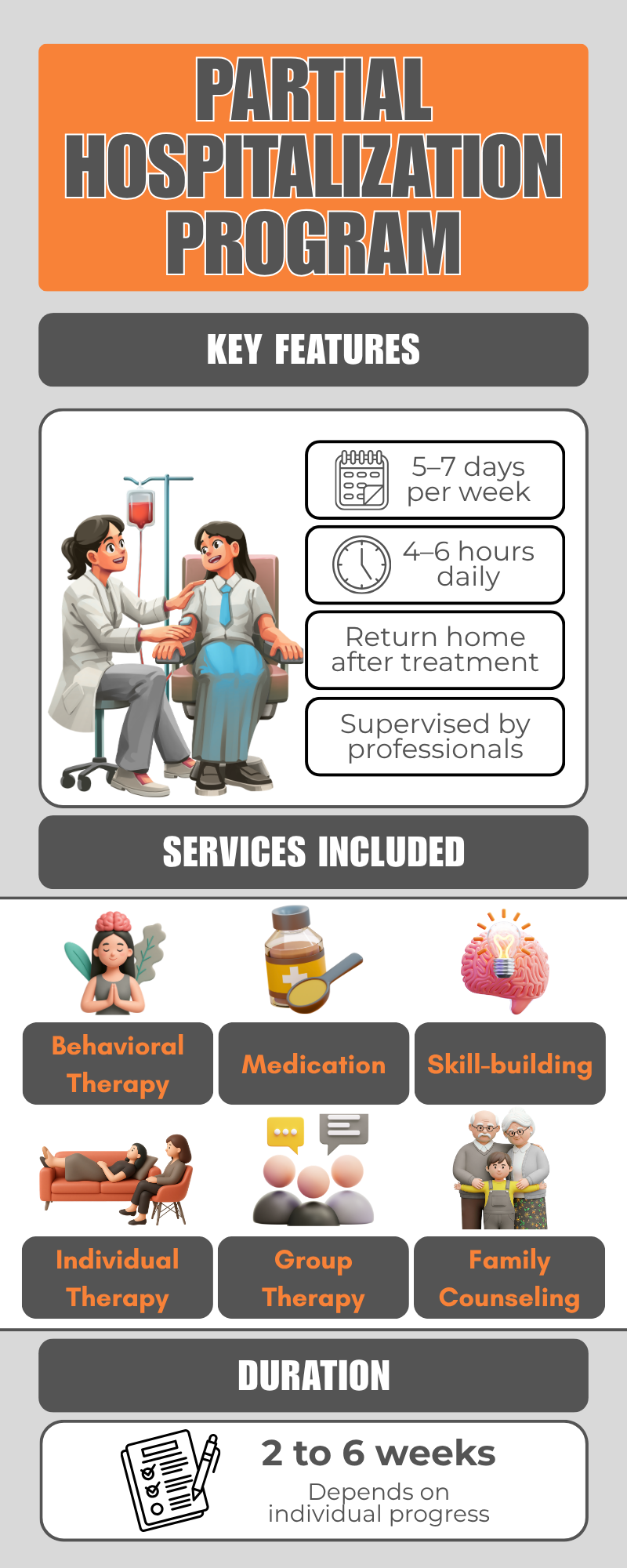
A typical PHP in North Carolina usually runs Monday through Friday, from roughly 9 AM to 3 or 4 PM. It is a full-time commitment to your recovery. You are not just sharing your feelings; you are also changing how your brain and body work.
A Typical Day in Partial Hospitalization Program North Carolina
Every veteran’s plan is unique, but a typical day at Otter House Wellness usually follows a specific structure:
Morning Check-In & Goal Setting
The day begins by grounding yourself. You’ll meet with your group to discuss how your evening at home went, identify any triggers you faced, and set a specific objective for the day.
Evidence-Based Group Sessions
These groups are not just for complaints. They are led by experts who guide you in learning how to manage your feelings.
Wrap-Up & Evening Planning
Before you head home, the team helps you prepare for the real world. You’ll plan your evening to ensure you have the support and tools ready for when you leave the facility.
In these sessions, you might explore Cognitive Behavioral Therapy (CBT) to help you recognize panic thoughts before they take over, or Dialectical Behavior Therapy (DBT) to help you stay calm when you feel overwhelmed.
Specialized Skills Training
This is where you get practical. You might learn about PTSD, why your heart races at loud noises, and practice grounding techniques that signal your brain that you are safe.
Lunch Break
Good nutrition and rest are important for your health. At a good PHP, you will have time to recharge and relax with others who understand the challenges of veteran life.
Individual Therapy or Medication Management
Once or twice a week, you’ll step away for one-on-one time with a therapist. They’ll adjust your medications, check your vitals, and help you with your mission.
Wrap-Up & Evening Planning
Before you head home, the team helps you prepare for the real world. You’ll plan your evening to ensure you have the support and tools ready for when you leave the facility.
Why Going Home is a Secret Weapon?
One of the most important aspects of PHP is the fact that you go home at night. In a 24/7 hospital, everything is controlled. The real challenge for a veteran isn’t staying calm in a facility; it’s staying calm at the grocery store, with the kids, or while driving.
Because you return home each evening, you get to test your skills in real-time. If you learned a new way to handle a temper tantrum in the morning, you might get to use it in the evening when the house gets loud.
The next morning, you bring those results back to the group. If it worked, you celebrate. If it didn’t, the team helps you adjust the strategy.
The Team Concept in Partial Hospitalization Program North Carolina
In PHP, you aren’t just seeing one person; you have an entire team dedicated to your recovery.
The team usually includes:
- Therapists: Experts in trauma and veteran-specific challenges.
- Psychiatrists: To manage any medical or chemical needs.
- Case Managers: The people who help you handle insurance and other questions.
- Peers: Other veterans and individuals who are fighting the same battle.
There is a unique healing power in being around people who speak your language and don’t require an explanation for why you are struggling.
Is PHP Right for You?
A partial hospitalization program is for veterans who:
Struggle to Function
You’re having trouble keeping a job or maintaining relationships because of your mental health.
Have Tried Weekly Therapy Without Success
You need more than an hour a week to see real change.
Are Stepping Down from a Hospital
You’ve finished an inpatient stay and need support before going back to full-time civilian life.
Are Dealing with a Dual Diagnosis
You are struggling with mental health and using substances to cope. A PHP treats both at the same time.
Reclaiming Your Peace in North Carolina
North Carolina has some of the best service members in the world. Being a quiet professional doesn’t mean you have to suffer in silence. If you feel like your life is stuck, a Partial Hospitalization Program North Carolina is not a sign of failure; it is a smart change.
At Otter House Wellness, we don’t just treat symptoms; we support the whole person. We understand that for a veteran, recovery needs to be practical, respectful, and effective. Our partial hospitalization program is designed to give you the highest level of care available while keeping you connected to your home and your community.
We know the paperwork can be overwhelming. That is why our team handles the insurance verification and the benefits checks for you. We take care of it all so you can focus 100% of your energy on getting your life back.
You have spent years looking out for everyone else. Now, it is time to let our team look out for you!
Are you ready to begin your journey toward finding peace? Contact us at Otter House Wellness today, and let us create your path home!
Otter House Wellness
April 10, 2026
- Telehealth Therapy That Accepts Medicaid in North Carolina
 Tired of spending gas money and half a day driving to a therapist? Discover how NC Medicaid lets you see top providers from home with zero copay.
 - Group Therapy Covered by Medicaid in North Carolina
 Replaying the exact same thoughts at 2 AM with no way out? Discover how NC Medicaid fully covers the group therapy hack that breaks your mental loops.
 - Outpatient Mental Health Treatment for Medicaid Recipients in NC
 Did you know you don't need a doctor's referral to start therapy on NC Medicaid? Discover how to access fast, free mental health care from home.
 - Medicaid Mental Health Treatment for Parents and Families in NC
 You can't pour from an empty cup. Discover the "oxygen mask" rule in NC Medicaid that covers parent AND child mental health under one plan.
 - Mental Health Programs for Young Adults on Medicaid in North CarolinaDoes Rhode Island Medicaid cover treatment for addiction and depression? Find out what’s covered, from detox and residential care to PHP, IOP, therapy, and medication.
- ADHD Treatment That Accepts Medicaid in North Carolina
 Looking for ADHD treatment that accepts Medicaid in North Carolina? Learn about treatment options and how support can make daily life easier.
 - Bipolar Disorder Treatment Covered by Medicaid in NC
 Learn about bipolar disorder treatment covered by Medicaid in NC, including therapy, medication, Medicaid plans, and support options at Otter House Wellness.
Recommended Blogs


Telehealth Therapy That Accepts Medicaid in North Carolina
Group Therapy Covered by Medicaid in North Carolina