
PHP vs IOP vs Outpatient Rehab: Which Is Right for You?
Usually, when people start looking for mental health or addiction treatment options, they expect one clear answer.
Instead, they find 3: Outpatient, IOP, and PHP.
And suddenly they start wondering, “Which one am I supposed to choose?”
If you’re someone looking for clarity and wants to compare PHP vs IOP vs outpatient, you’re not alone. Most people don’t know the difference at first, and honestly, the names don’t help much.
But here’s the thing: this decision isn’t about picking the best program.
It’s about picking the one that fits your life right now!
Let’s Start With Real-Life Situations
Instead of getting into definitions, think about which of these situations sounds closest to you:
“I’m barely holding things together.”
You feel overwhelmed. Maybe your routine is off. Maybe your emotions feel unpredictable. Some days are manageable, others aren’t.
“I’m functioning, but struggling.”
You’re showing up to work or school, but it feels harder than it should. You’re tired, distracted, or relying on unhealthy coping habits.
“I’m okay, but I don’t want things to get worse.”
You’ve had challenges, but you’re relatively stable. You just want support to stay on track.
Each of these refer to a different level of care. Let’s break it down for you:
When PHP Makes the Most Sense?
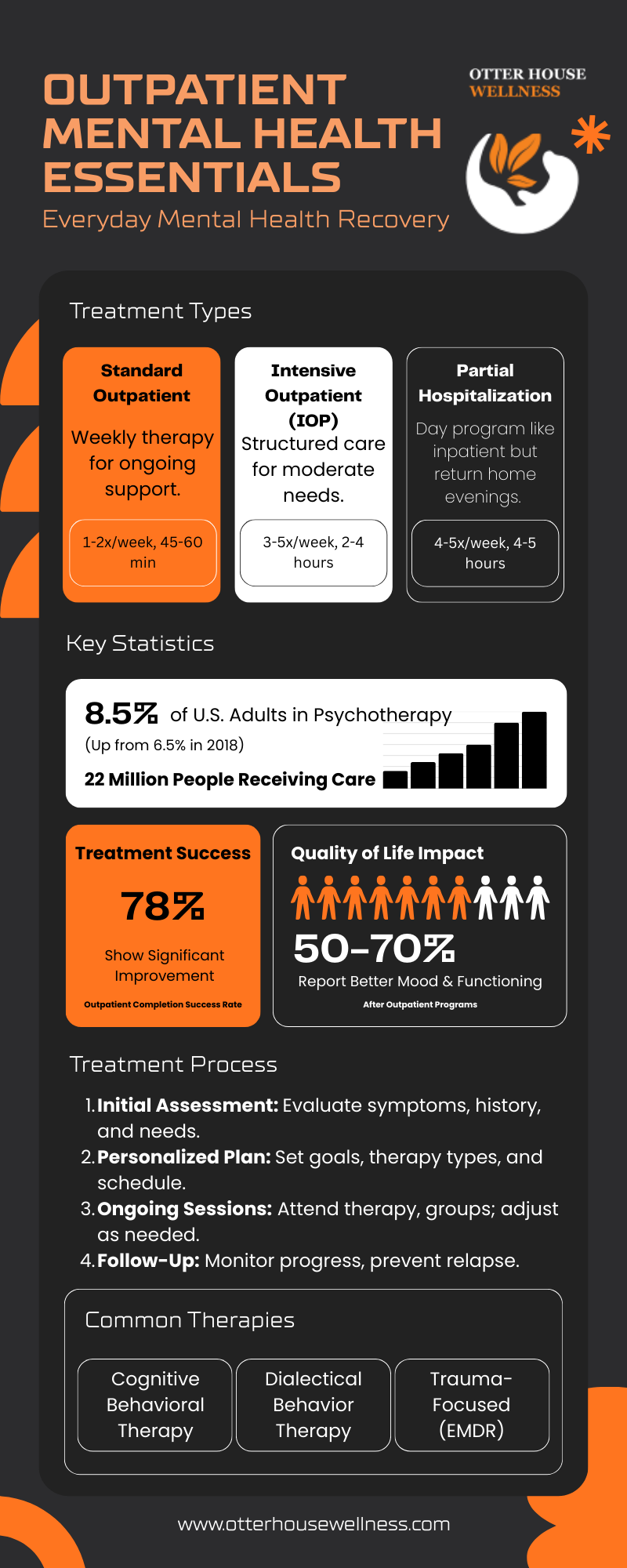
A Partial Hospitalization Program (PHP) is designed for the first situation.
When things feel unstable, you need more than just occasional support. You need structure built into your day.
PHP usually involves:
- Attending treatment most days of the week
- Spending several hours per day in care
- Regular clinical support and monitoring
This level of care creates a routine when everything else feels uncertain.
You’re not just checking in once a week. You’re actively working through challenges every day with support around you.
When is IOP the Better Fit?
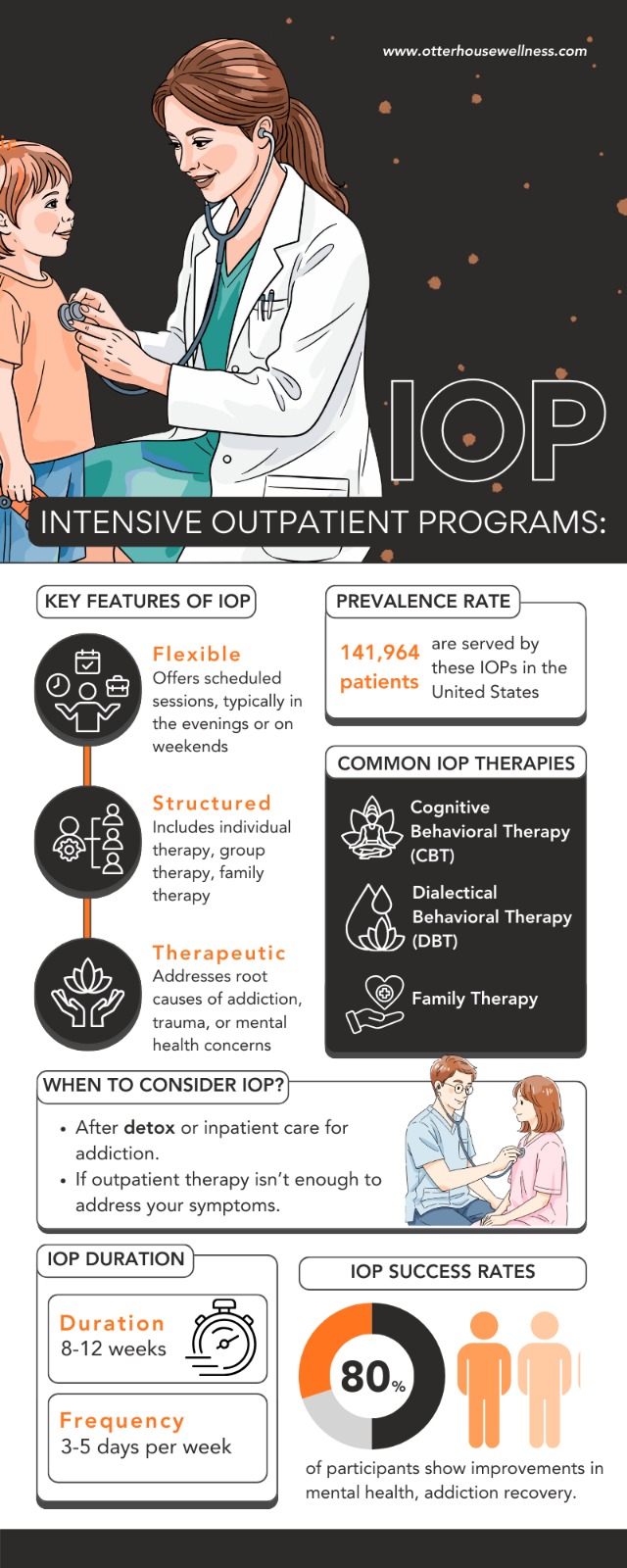
Intensive Outpatient Program (IOP) fits the second situation.
You’re functioning, but it’s taking effort.
You may still be dealing with:
- Stress or anxiety
- Substance use triggers
- Emotional ups and downs
IOP gives you structured support without taking over your entire day.
Typically, this means:
- A few sessions per week
- A few hours at a time
- Ongoing therapy and skill-building
The key difference in PHP vs IOP vs outpatient shows up here.
IOP enables you to stay in your daily life while learning how to handle everything.
It’s not about stepping away from life; it’s about improving how to manage it in a better way.
When Outpatient Care Is Enough?
Outpatient care fits the third situation.
You’re stable. You’ve likely developed some coping skills. But you don’t want to lose progress.
Outpatient usually involves:
- Weekly or biweekly sessions
- Individual or group therapy
- Long-term support
This level of care works best when you don’t need constant structure.
Instead, it gives you space to:
- Reflect
- Stay accountable
- Keep moving forward
It’s less about rebuilding and more about maintaining.
PHP vs IOP vs Outpatient: A Different Way to Think About It
Instead of comparing programs, think of it like this:
- PHP helps you regain control
- IOP helps you build consistency
- Outpatient helps you maintain progress
Each one serves a different purpose.
The goal is not to stay in treatment forever, but to adjust it as your situation improves.
What Happens If You Choose the Wrong Level?
This is a common concern, and the honest answer is: it’s not permanent.
If you start in IOP and realize you need more support, you can step up to PHP.
If you start in PHP and feel ready for more independence, you can step down to IOP or outpatient rehab.
Treatment should adjust as you do.
What Actually Matters More Than the Program Name?
A lot of people choose between PHP, IOP, and outpatient like it’s a final decision.
But what matters more is:
- Are you showing up consistently?
- Do you feel supported?
- Are you learning skills you can actually use?
- Is the program helping you move forward?
The name of the program matters less than the experience.
How Otter House Wellness Helps You Find the Right Fit?
At Otter House Wellness, we don’t start our process with, “Which program do you want?”
We start with:
“What’s going on right now?”
From there, our team helps you figure out what level of care makes sense.
Support includes:
- Clinical assessments to understand your needs
- Guidance on whether PHP, IOP, or outpatient fits best
- Flexible programs that adjust as you progress
- Mental health and addiction support in one place
You’re not expected to have the answer before you call. That’s what the team helps you figure out.
A Quick Self-Check Before You Decide
If you’re still unsure, ask yourself:
- Do I feel stable most days?
- Am I able to handle stress without things spiraling?
- Have I tried lower levels of care before?
- Do I need daily structure or occasional support?
Your answers will point you in the right direction.
But…
What If You’re Still Not Sure?
It’s completely normal to feel stuck between options.
Many people feel unsure about choosing the right level of care. They worry they might pick something too intense or not intense enough.
But here’s the reality: You don’t have to figure it out perfectly before starting.
Most people gain clarity after they begin treatment, not before. Once you start talking to our professionals, sharing your experience, and understanding your patterns, the right level of care becomes clearer.
In Conclusion: Start Where You Are
If you’re searching for PHP vs IOP vs outpatient, it usually means something in your life needs attention.
And that’s worth taking seriously.
You don’t need to pick the perfect program today; you just need to start the conversation.
At Otter House Wellness, you can talk through your situation, understand your options, and get a clear recommendation, without judgment.
Sometimes clarity is the first step toward change.
And that’s enough to begin with!
Otter House Wellness
March 28, 2026
- Telehealth Therapy That Accepts Medicaid in North Carolina
 Tired of spending gas money and half a day driving to a therapist? Discover how NC Medicaid lets you see top providers from home with zero copay.
 - Group Therapy Covered by Medicaid in North Carolina
 Replaying the exact same thoughts at 2 AM with no way out? Discover how NC Medicaid fully covers the group therapy hack that breaks your mental loops.
 - Outpatient Mental Health Treatment for Medicaid Recipients in NC
 Did you know you don't need a doctor's referral to start therapy on NC Medicaid? Discover how to access fast, free mental health care from home.
 - Medicaid Mental Health Treatment for Parents and Families in NC
 You can't pour from an empty cup. Discover the "oxygen mask" rule in NC Medicaid that covers parent AND child mental health under one plan.
 - Mental Health Programs for Young Adults on Medicaid in North CarolinaDoes Rhode Island Medicaid cover treatment for addiction and depression? Find out what’s covered, from detox and residential care to PHP, IOP, therapy, and medication.
- ADHD Treatment That Accepts Medicaid in North Carolina
 Looking for ADHD treatment that accepts Medicaid in North Carolina? Learn about treatment options and how support can make daily life easier.
 - Bipolar Disorder Treatment Covered by Medicaid in NC
 Learn about bipolar disorder treatment covered by Medicaid in NC, including therapy, medication, Medicaid plans, and support options at Otter House Wellness.
Recommended Blogs


Telehealth Therapy That Accepts Medicaid in North Carolina

Group Therapy Covered by Medicaid in North Carolina