Does Medicaid Cover Dual Diagnosis Treatment in North Carolina?
Adults with mental health problems often have substance abuse problems as well. This is termed the dual diagnosis and can be overwhelming if not supported well.
You may be thinking: Can I afford treatment, particularly if I am receiving Medicaid?
The good news is that in many cases, Medicaid in North Carolina covers dual diagnosis treatment.
Let’s explain it in an easy and understandable manner.
What is Dual Diagnosis?
Dual diagnosis occurs when someone has both a mental health issue and a substance use disorder.
For example, an individual might have anxiety as well as problem with alcohol. They influence one another, and so it makes treatment more difficult.
This is why it is very rare for someone to get better when they only treat one problem.
Why Dual Diagnosis Treatment Matters
Combined treatment of both conditions is more stable and effective. Research shows that about 9.2 million adults in the U.S. have co-occurring disorders.
It’s more prevalent than you may realize that someone may suffer from dual diagnosis.
Integrated treatment is a means of tackling the underlying problem, rather than the symptom.
Does Medicaid Cover Dual Diagnosis Treatment in NC?
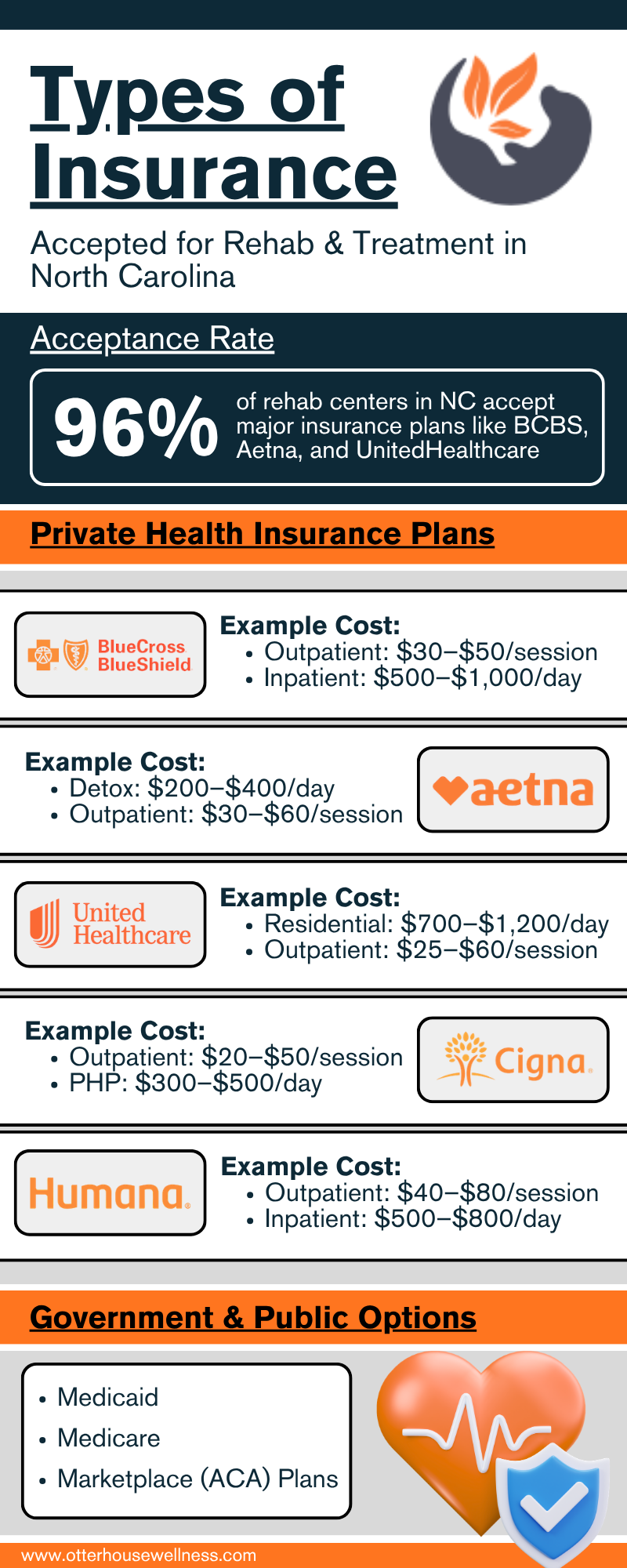
Yes, there are a number of dual diagnosis services that are covered by Medicaid in North Carolina.
Eligibility, provider approval, and level of care required will determine coverage.
Generally, Medicaid will pay for:
- Mental health therapy
- Treatment for substance use disorders (SUDs).
- Medication management
- Intensive outpatient programs (IOP)
- Partial hospitalization programs (PHP)
At Otter House Wellness, treatment programs are put together to match the available Medicaid coverage.
This will facilitate access to care for people and families throughout North Carolina.
Treatments Covered by Medicaid
Outpatient Programs
Outpatient care enables you to get therapy sessions on a regular basis without having to reside in a secure facility.
This is effective for people who are able to do daily activities without compromising their safety.
For instance, one person who lives close to Uptown Charlotte might go to the sessions and still work.
Intensive Outpatient Programs (IOP)
IOP offers more structured treatment, but still doesn’t involve living at the facility.
Sessions are repeated several times a week for a few hours.
Usually, the Medicaid program will provide this type of care as long as it is medically required.
Partial Hospitalization Programs (PHP)
PHP provides a more intensive experience and full-day treatment. Patients are discharged at the end of the day, but are supported intensively during the day.
This choice is ideal for individuals who require additional stability but not full hospitalization.
Inpatient Treatment
If the case is very serious, an inpatient stay for stabilization may be covered by Medicaid.
This includes supervision and medical support, which will be available 24 hours a day.
Typically prescribed for people in high-risk situations.
How often is Medicaid Used for Mental Health Services?
Mental health treatment in the U.S. is a significant Medicaid responsibility.
Research indicates that almost 1 out of every 3 adults with mental and behavioral health conditions receives Medicaid coverage.
This makes it one of the greatest behavioral health service providers.
Many people in North Carolina are on Medicaid to get treatment.
Challenges People Face When Seeking Treatment
Many people don’t seek assistance when they need it, even if they are covered.
These are some common obstacles that can be overcome:
- A lack of understanding of Medicaid eligibility.
- Failure to understand what is included in the services, and what is not.
- Stigma for mental health and addiction issues
- Lack of appropriate choices of providers.
These systems can be stressful to navigate in busy areas such as Raleigh and Durham.
This is why it is essential to have the advice of a trusted provider.
How Otter House Wellness Supports Dual Diagnosis Treatment
At Otter House Wellness, programs are designed specifically for individuals dealing with co-occurring disorders.
They have a dual focus on mental health and substance use.
This includes:
- Personalized treatment plans
- Therapy/counselling sessions
- Medication support as required
- Ongoing recovery planning
From those living near the Blue Ridge Parkway to those living in urban areas, like Charlotte, care is customized to fit your lifestyle.
The Reasons Why Integrated Treatment Works Better
Separate treatment for mental health and drug or alcohol use may result in relapse. When addressing both conditions simultaneously, it is referred to as integrated care.
Research indicates that integrated treatment is effective in significantly enhancing long-term treatment outcomes.
This can support individuals to develop more effective coping skills and stay stable.
Signs You May Need Dual Diagnosis Treatment
Sometimes it can be difficult to identify when both conditions occur.
If you experience any of these symptoms, you might need treatment:
- Taking drugs to deal with feelings or stress
- Persistent sadness, depression, or mood swings
- Lack of interpersonal and/or work relationships.
- Multiple failed attempts to stop substance use.
If you notice these symptoms early, you can get help in time.
What Makes North Carolina Special for Treatment?
North Carolina has an urban and peaceful environment to promote recovery.
Whether it’s the relaxed lifestyle of the Outer Banks or the hustle and bustle of Charlotte, there is no one-size-fits-all, and everyone requires a different type of setting.
People can access treatment more easily statewide with access to Medicaid-supported services.
The flexibility of this option enables people to select the care that is most suitable for them and that they feel comfortable with.
Take the First Step towards Recovery
Dual diagnosis may be complex, but the proper treatment can make a big difference. In North Carolina, Medicaid coverage can be more easily obtained than you might think.
At Otter House Wellness, we want to give you straightforward information and good care to help you recover in the long term.
Talking to someone is the first step if you or someone you know needs support.
Call Otter House Wellness now to find out more about dual diagnosis treatment in NC that’s covered by Medicaid.
It’s never too late to take steps to improve your life.
Otter House Wellness
May 7, 2026
- Telehealth Therapy That Accepts Medicaid in North Carolina
 Tired of spending gas money and half a day driving to a therapist? Discover how NC Medicaid lets you see top providers from home with zero copay.
 - Group Therapy Covered by Medicaid in North Carolina
 Replaying the exact same thoughts at 2 AM with no way out? Discover how NC Medicaid fully covers the group therapy hack that breaks your mental loops.
 - Outpatient Mental Health Treatment for Medicaid Recipients in NC
 Did you know you don't need a doctor's referral to start therapy on NC Medicaid? Discover how to access fast, free mental health care from home.
 - Medicaid Mental Health Treatment for Parents and Families in NC
 You can't pour from an empty cup. Discover the "oxygen mask" rule in NC Medicaid that covers parent AND child mental health under one plan.
 - Mental Health Programs for Young Adults on Medicaid in North CarolinaDoes Rhode Island Medicaid cover treatment for addiction and depression? Find out what’s covered, from detox and residential care to PHP, IOP, therapy, and medication.
- ADHD Treatment That Accepts Medicaid in North Carolina
 Looking for ADHD treatment that accepts Medicaid in North Carolina? Learn about treatment options and how support can make daily life easier.
 - Bipolar Disorder Treatment Covered by Medicaid in NC
 Learn about bipolar disorder treatment covered by Medicaid in NC, including therapy, medication, Medicaid plans, and support options at Otter House Wellness.
Recommended Blogs


Telehealth Therapy That Accepts Medicaid in North Carolina

Group Therapy Covered by Medicaid in North Carolina