
How Online IOP Programs in Georgia Help You Heal Without Pausing Life
In the shadows, people see you as happy and free, because that’s what you want them to see. Living two lives, happy but not free. — Jay-Z, Smile
You know the line. Maybe not from the song. Maybe from the inside.
You show up. You respond to texts. You make dinner, hit your deadlines, and ask other people how they are doing. From the outside, you look intact. And then you close the door and feel the weight of how much energy it takes to hold that picture together.
That is not a small thing. It is exhausting in a way that sleep doesn’t fix.
A lot of people who reach out about an online IOP program in Georgia are living exactly that two lives. The one other people see, and the one happening underneath it. They are not in freefall. They are functioning. However, functioning is not the same as okay, and somewhere they know it.
An online intensive outpatient program in Georgia exists for that person. Not only for the visible crisis. For the quiet one, too.
Why Online Makes Sense for Georgia
Georgia is a large state. This fact is easy to overlook until you live an hour outside Atlanta or in a city where rush-hour traffic turns a thirty-minute commute into something unbearable.
Online IOP removes geography from the equation entirely. Your zip code is not a barrier. Your schedule is not a barrier. The only thing required is a private space and a reliable connection. That accessibility is not a workaround. For many people, it is what makes treatment possible in the first place.
What Happens Inside an Online IOP
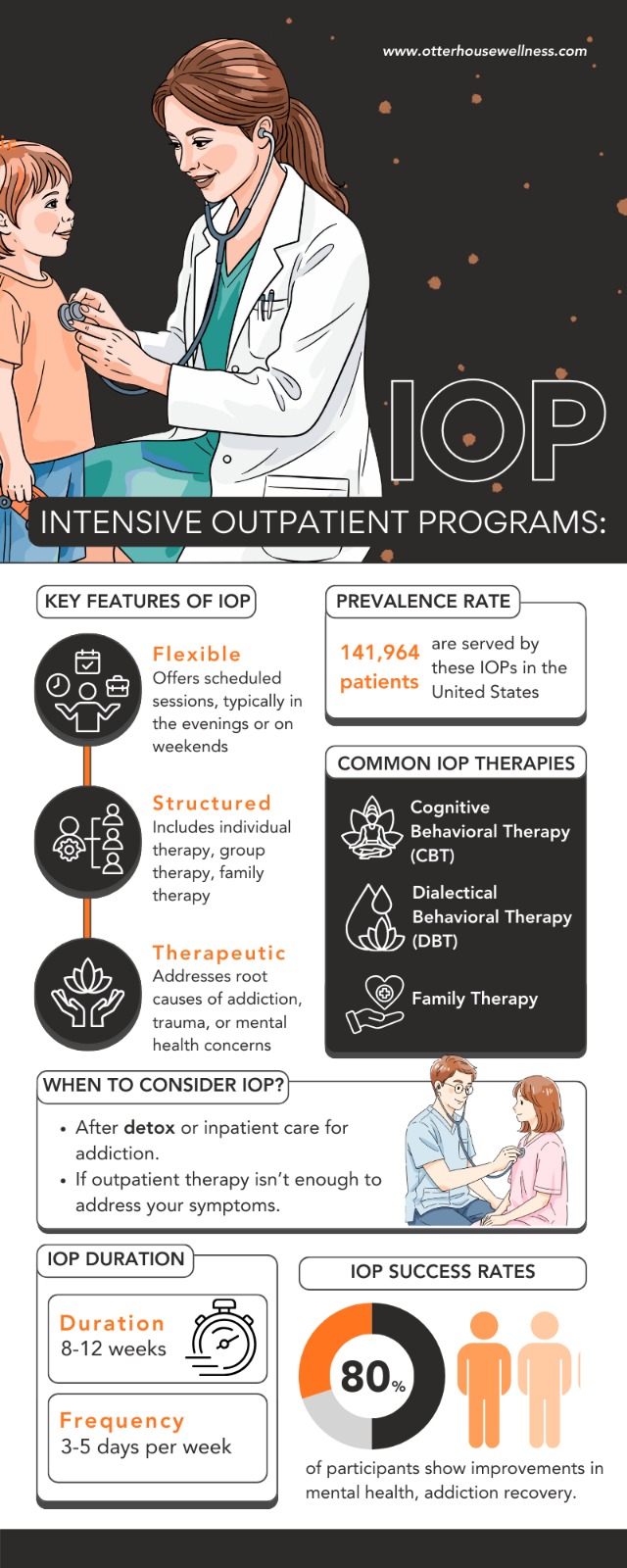
Most online IOP programs run three to five days per week, for a few hours each session. You log on in the morning or evening. You do real therapeutic work, not mere check-ins or brief calls. Then you close the laptop and go back to your day. Here’s what you do each day:
Group Therapy
Group therapy is the backbone of most online IOP programs, and it tends to surprise people.
Not because it is difficult, but because of what happens when someone across the screen says the thing you have been carrying alone and you realize that you were never as isolated in this as you thought. Something loosens. That loosening is therapeutic in a way that no clinical term fully captures.
Individual Sessions
Running alongside group work are individual sessions with a clinician who knows you. Not just your file, but you. Where you are this week. What shifted since last time. What is not moving the way either of you hoped.
The individual thread and the group thread work together in a way that neither can do alone.
Cognitive Behavioral Therapy
CBT assists you in making connections between thoughts, feelings, and actions. For most people, that relationship has been operating automatically for a long time. A circle of thoughts and responses that seem to be simply the way things are.
CBT breaks the cycle. It gives you a map. And then it assists you to trace another path.
Dialectical Behavior Therapy
DBT develops tangible capabilities in four distinct domains: the control of your emotions, distress tolerance without escalation, currentness, and relationship navigation without giving up or incinerating everything.
In case your nervous system has been under prolonged stress, DBT will equip you with handy tools to deal with it.
Trauma-Informed Care
The majority of those who come to an online IOP have backgrounds. Trauma-informed care recognizes your past and incorporates it into the present.
It acknowledges that what occurred back then is coming to mold what is occurring now, and it constructs treatment based on that fact.
What to Look for in an Online IOP in Georgia
Not all programs that mention the term “online IOP in Georgia” are selling the same thing. Before you commit, there are a couple of things you should listen to.
A real program will carry out a real assessment and then place you. Not a short form that leads all of you into a single path, but a real-life clinical conversation that concludes with a recommendation you can comprehend and inquire about. When a program does not make sense for why this level of care is appropriate, where you are at this point, it is worth paying attention.
Inquire about treating co-occurring disorders. Most people do not come to depression, substance use, anxiety, and trauma as individual things, and a program that approaches them as individual things is not designed to address them in the way that people experience them.
Question on the step-down plan prior to your first day. A serious program has already reflected on what follows it. Inclusion of discharge planning is not an incidental feature; it is testimony that the program is interested in your recovery, not in your enrollment only.
Finally, inquire about who you will be working with. Credentials matter. Consistency is more important than most people expect until they are within a program and find out how important it is to see the same face, hear the same voice, and not have to start over each week.
Final Words
There is a moment that most people describe, somewhere in the process of reaching out about treatment, where they wonder if they are bad enough to deserve this level of care. They tell themselves that others have it worse.
That moment is not a signal to turn back. It indicates that the habit has been in control for a sufficient period of time.
You do not have to have reached bottom to reach out. You do not have to have stopped functioning to admit that functioning alone is not the same as living. An online IOP program in Georgia will not ask you to be further along than you are. It will meet you where you are, consistently, until something begins to shift. That is what it is built for.
Otter House Wellness provides evidence-based mental health treatment through a compassionate and individualized approach. If you are ready to take the next step, we are here. Reach out today!
Otter House Wellness
April 16, 2026
- Telehealth Therapy That Accepts Medicaid in North Carolina
 Tired of spending gas money and half a day driving to a therapist? Discover how NC Medicaid lets you see top providers from home with zero copay.
 - Group Therapy Covered by Medicaid in North Carolina
 Replaying the exact same thoughts at 2 AM with no way out? Discover how NC Medicaid fully covers the group therapy hack that breaks your mental loops.
 - Outpatient Mental Health Treatment for Medicaid Recipients in NC
 Did you know you don't need a doctor's referral to start therapy on NC Medicaid? Discover how to access fast, free mental health care from home.
 - Medicaid Mental Health Treatment for Parents and Families in NC
 You can't pour from an empty cup. Discover the "oxygen mask" rule in NC Medicaid that covers parent AND child mental health under one plan.
 - Mental Health Programs for Young Adults on Medicaid in North CarolinaDoes Rhode Island Medicaid cover treatment for addiction and depression? Find out what’s covered, from detox and residential care to PHP, IOP, therapy, and medication.
- ADHD Treatment That Accepts Medicaid in North Carolina
 Looking for ADHD treatment that accepts Medicaid in North Carolina? Learn about treatment options and how support can make daily life easier.
 - Bipolar Disorder Treatment Covered by Medicaid in NC
 Learn about bipolar disorder treatment covered by Medicaid in NC, including therapy, medication, Medicaid plans, and support options at Otter House Wellness.
Recommended Blogs


Telehealth Therapy That Accepts Medicaid in North Carolina

Group Therapy Covered by Medicaid in North Carolina