
Online IOP North Carolina: Breaking Barriers to Mental Health Care
There is a particular kind of loneliness that has nothing to do with being alone.
It lives in the stretch of highway between Boone and the nearest therapist who is taking new patients. It lives in the mountain counties where the waiting list is six months long, and the drive is forty-five minutes each way on a good day. It lives in the eastern flatlands, in the small towns whose main streets have everything except a psychiatrist.
North Carolina is a beautiful state. It is also a state where more than 11.2 million people live in communities without enough mental health professionals to serve them. That is not a policy statistic. That is a neighbor. A coworker. Possibly you, reading this on a phone in a county where help has always existed somewhere, just never quite here.
Distance Was Never Just About Miles
We talk about access to mental health care as though it is simply a matter of location. Drive farther. Find the right zip code. However, distance in North Carolina is rarely just geographical.
It is the mother of three who cannot find childcare for a three-hour round trip to an appointment. The man has finally decided he is ready to get help, but he learns that the earliest opening is in four months. It is the person who lives forty minutes outside Asheville, or two hours from Charlotte, or in one of the dozens of counties classified as mental health deserts, where the shortage is not a gap; it is a wall.
For a long time, there was no good answer for these people. Weekly therapy, when available at all, was not always enough. Inpatient care required leaving a life behind. The middle ground was almost entirely inaccessible if you didn’t live close enough to it.
That middle ground has a name. It is called an Intensive Outpatient Program, or IOP. For most of its history, North Carolina’s geography made it inaccessible to those who needed it most.
What Changed, and Why It Matters Here More Than Almost Anywhere
Online IOP did not begin as an act of compassion. It began, like most telehealth expansions, as a practical response to crisis.
The pandemic-era shift to virtual care revealed something that mental health professionals had suspected for years: that the screen, when held by the right clinical team and the right structure, is not a lesser version of care. It is care. Equally effective. Sometimes, it is more accessible in ways that go beyond distance, with no waiting room, no commute anxiety, and no need to explain to an employer why you need a Tuesday afternoon off.
For North Carolina, this was not merely convenient. It was transformative. The mountains did not move. The rural counties did not suddenly gain psychiatrists. The waiting lists did not evaporate. Now, for the first time, a person sitting in a small town in Rutherford County can access the same level of structured intensive mental health care as someone living three blocks from a treatment center in Charlotte.
That is worth sitting with for a moment. Not as a feature. As a fact that changes what is possible for real people in real places.
What Intensive Outpatient Care Offers
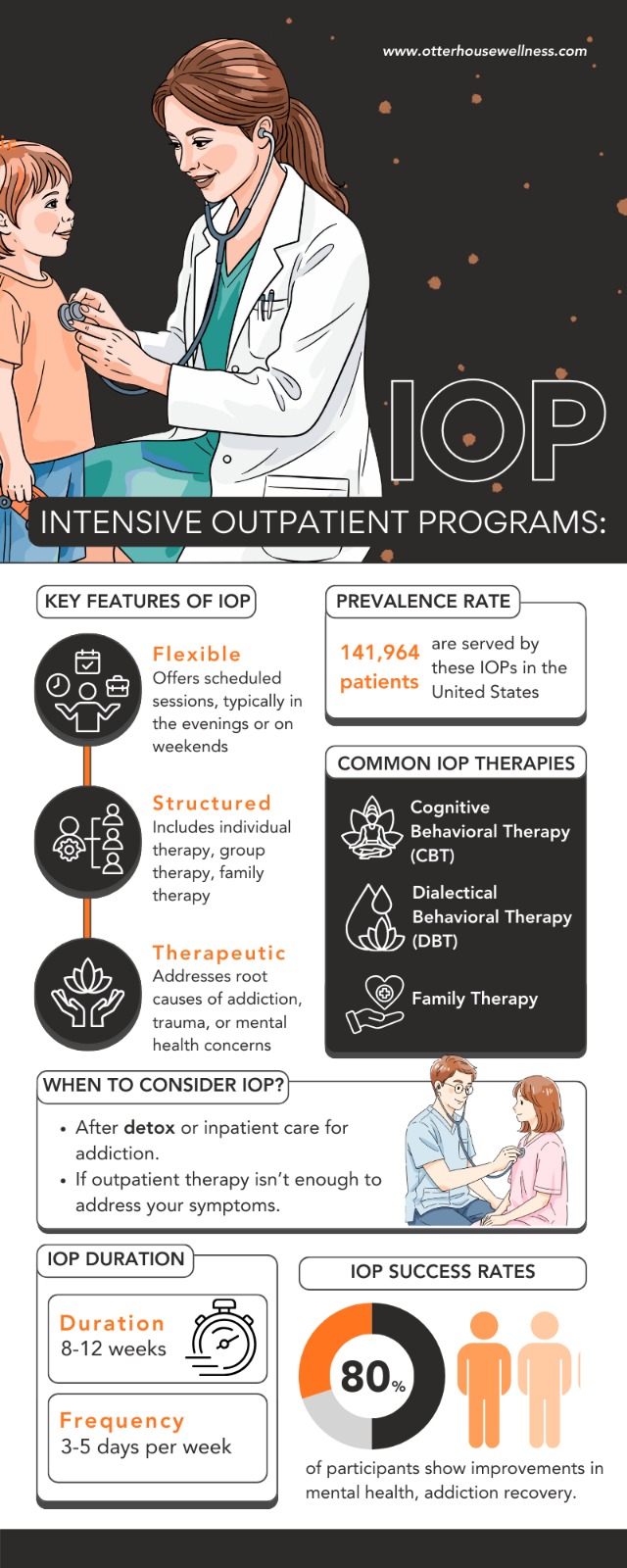
An online IOP is not weekly therapy with a fancier name. It is structured clinical care, typically nine to twelve hours per week, built around evidence-based approaches. Licensed clinicians deliver cognitive behavioral therapy, dialectical behavior therapy, and trauma-informed work through a secure platform.
It is designed for individuals who have progressed beyond needing weekly treatment but do not require hospitalization. It is the level of care that fills the space between those two extremes. The person managing depression that has started to affect their work. The person whose anxiety has quietly taken over more of their life than they’ve admitted to anyone. The person stepping down from a higher level of care who is not yet ready to go it alone.
It is also designed for people who still have a life to maintain while they heal. Sessions happen around work schedules, family responsibilities, and the reality that recovery does not ask your employer for time off. You log in. You do the work. You close the laptop and return to your day. Changed, incrementally, in ways that compound over time.
The Screen Closed the Distance. The Care Did the Rest.
For North Carolinians living in places where going was never a simple thing, online IOP did not just increase convenience. It removed a barrier that had, for years, stood between a person and the help they had already decided they needed.
That matters. The decision to seek intensive support is not a small one. It is made after a long time of managing, minimizing, and hoping things will level out on their own. When someone arrives at that decision, the last thing they need is for geography to be the answer they get instead of care.
How to Begin at Otter Wellness Center
The first step at Otter Wellness Center is not a form to fill out. It is a conversation.
When you contact us, a real person will talk to you about your situation. From there, a confidential clinical assessment helps determine whether online IOP is the right level of care for your situation. Insurance is verified before anything begins, with transparency about what your plan covers and what, if anything, you can expect to pay out of pocket.
North Carolina mandates that insurance providers cover mental health treatment at the same level as physical health care, ensuring that most major plans include IOP coverage. We will provide you with a clear understanding of your coverage before your first session.
If the fit is right, scheduling is built around your life, not the other way around.
The geography of North Carolina has kept too many people from taking care for too long. At Otter House Wellness Center, that distance is no longer the determining factor it once was. If you’ve been waiting for a better option, a closer one, or a more flexible schedule. This is us telling you that the room exists now.
Reach out today for a confidential conversation about where you are and what’s possible.
Otter House Wellness
April 16, 2026
- Telehealth Therapy That Accepts Medicaid in North Carolina
 Tired of spending gas money and half a day driving to a therapist? Discover how NC Medicaid lets you see top providers from home with zero copay.
 - Group Therapy Covered by Medicaid in North Carolina
 Replaying the exact same thoughts at 2 AM with no way out? Discover how NC Medicaid fully covers the group therapy hack that breaks your mental loops.
 - Outpatient Mental Health Treatment for Medicaid Recipients in NC
 Did you know you don't need a doctor's referral to start therapy on NC Medicaid? Discover how to access fast, free mental health care from home.
 - Medicaid Mental Health Treatment for Parents and Families in NC
 You can't pour from an empty cup. Discover the "oxygen mask" rule in NC Medicaid that covers parent AND child mental health under one plan.
 - Mental Health Programs for Young Adults on Medicaid in North CarolinaDoes Rhode Island Medicaid cover treatment for addiction and depression? Find out what’s covered, from detox and residential care to PHP, IOP, therapy, and medication.
- ADHD Treatment That Accepts Medicaid in North Carolina
 Looking for ADHD treatment that accepts Medicaid in North Carolina? Learn about treatment options and how support can make daily life easier.
 - Bipolar Disorder Treatment Covered by Medicaid in NC
 Learn about bipolar disorder treatment covered by Medicaid in NC, including therapy, medication, Medicaid plans, and support options at Otter House Wellness.
Recommended Blogs


Telehealth Therapy That Accepts Medicaid in North Carolina

Group Therapy Covered by Medicaid in North Carolina